
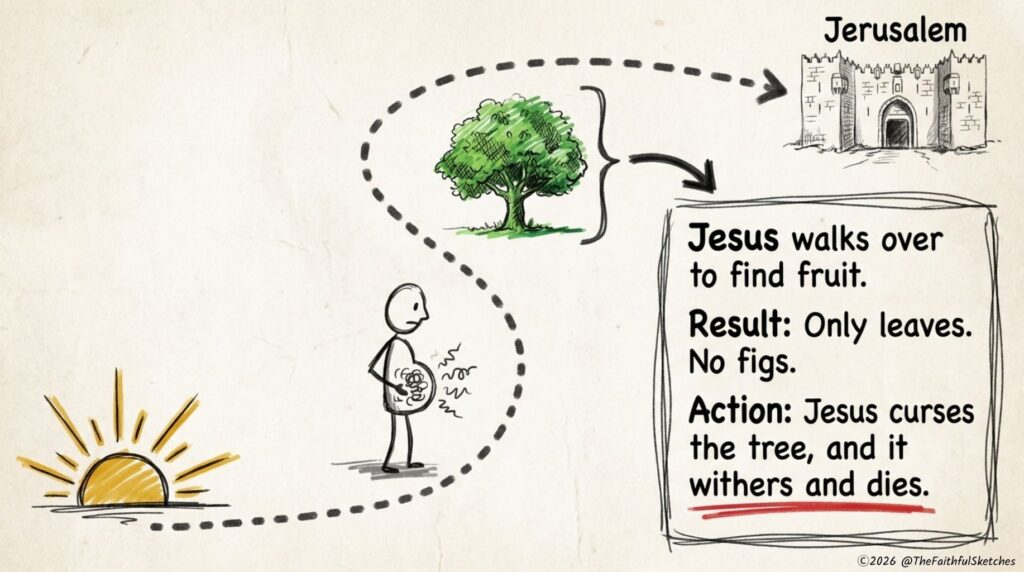
Jesus and His disciples are walking toward Jerusalem one morning, and Jesus is hungry. He spots a fig tree in the distance, full of leaves, and walks over to see if it has any fruit. But He finds none, only leaves. So He curses the tree, and it withers and dies.
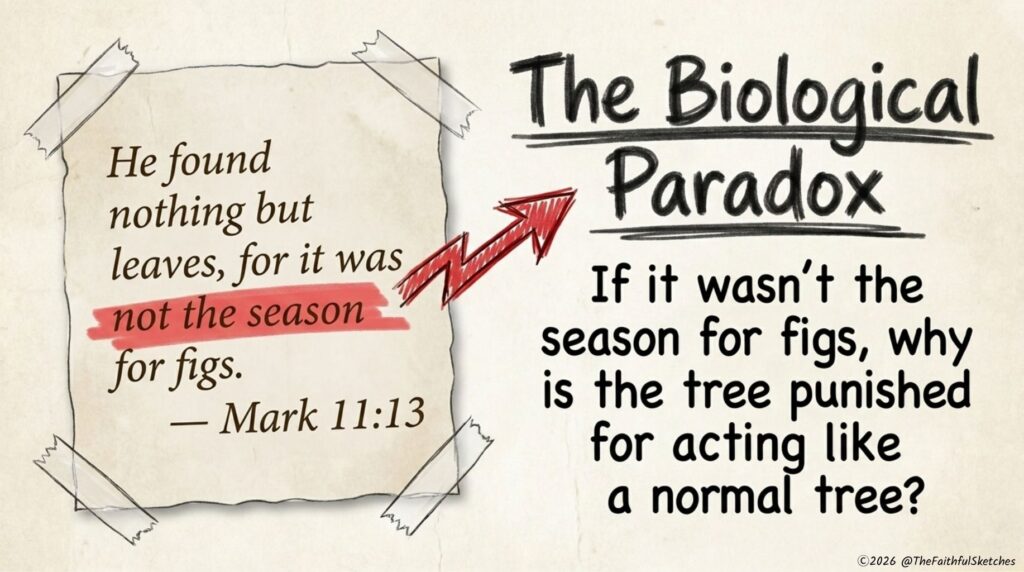
But here’s the puzzle. Mark 11:13 tells us plainly that it wasn’t even the season for figs. So why did Jesus curse the fig tree for having no fruit when no fruit should have been expected? At first glance it seems unfair, even petty. But once you understand how fig trees grow and what they symbolize, the whole scene opens up into one of the most pointed lessons Jesus ever gave.
How Fig Trees Actually Grow
Fig trees work in an unusual way. They produce early figs, called taqsh in Hebrew, before the main harvest arrives. These tiny knobs of fruit appear even before the leaves fully unfold. That detail is the key to the entire passage.
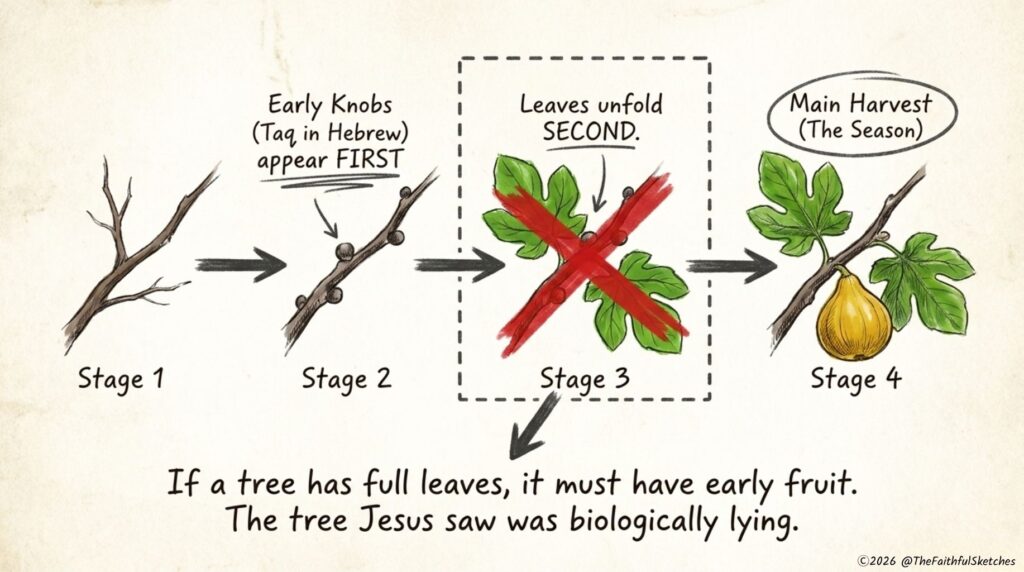
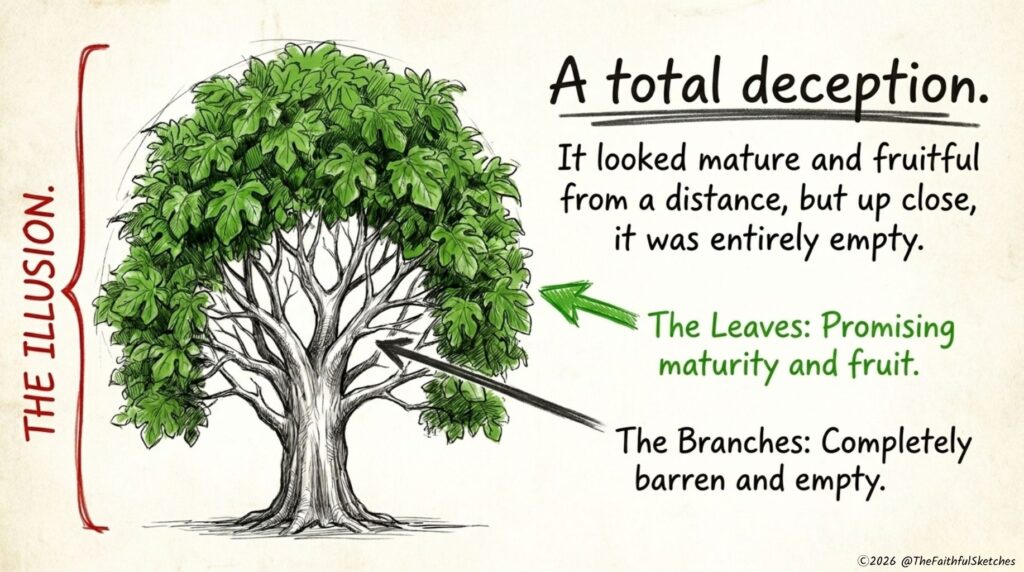
So if a fig tree is already covered in leaves, you would reasonably expect at least some early fruit on its branches. The leaves are essentially an advertisement, a signal that the tree is productive. But the tree Jesus saw was all leaves and nothing else. No figs, not even the early knobs. It looked mature, promising, and fruitful from a distance, yet it was completely empty. The tree was making a promise it couldn’t keep.
What the Fig Tree Represents
Here’s where the meaning deepens. Throughout the Bible, the fig tree often represents the nation of Israel. The prophets used this image repeatedly, as in Hosea 9:10 and Jeremiah 8:13.
So this fig tree, full of leaves but bearing no fruit, becomes a vivid picture of Israel’s spiritual condition at the time. The people were outwardly religious but inwardly barren. They looked close to God on the surface, with all the right rituals and appearances, yet their hearts were far from Him. The leaves were impressive. The fruit was missing.
The Temple Scene That Explains Everything
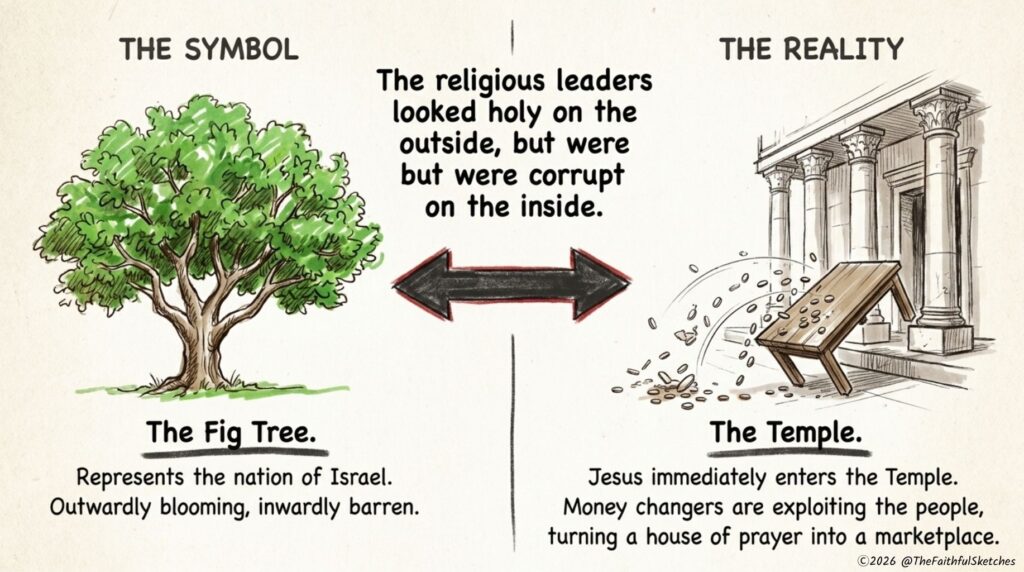
The timing here is everything, and it’s no accident. Right after cursing the fig tree, Jesus enters the temple and drives out the money changers in Mark 11:15-17. They were exploiting worshippers and turning God’s house of prayer into a marketplace.
Do you see the connection? Just like the fig tree, the religious system looked holy on the outside but was corrupt within. All leaves, no fruit, pure deception. Mark deliberately wraps the temple cleansing inside the fig tree story, one beginning the episode and the other ending it. The fig tree was a living parable acted out in real time. Jesus wasn’t simply annoyed at a plant. He was exposing hypocrisy and pronouncing judgment on empty religion that produces nothing God actually wants.
The Fruit God Looks For
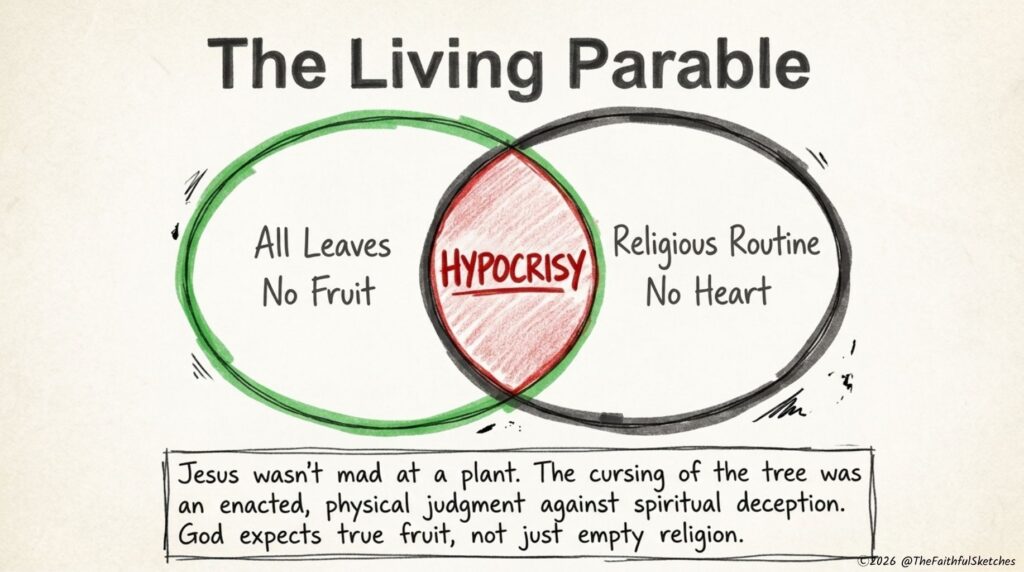
This raises a searching question for all of us. Are we like that fig tree? Do we go to church, post Bible verses online, and say the right things, while ignoring the poor, gossiping, or carrying a bad attitude? Are we living out what we display to others, or are we mostly leaves?
Jesus’ warning is clear: God isn’t fooled by appearances. As 1 Samuel 16:7 says, “man looks on the outward appearance, but the LORD looks on the heart.” True faith isn’t about looking good. It’s about being transformed from the inside out. This fruit isn’t how we earn salvation; it’s the evidence that salvation is real in us. Scripture describes exactly what that fruit looks like in Galatians 5:22-23: love, joy, peace, patience, kindness, goodness, faithfulness, gentleness, and self-control. If we’re all leaves and no fruit, we’re in real danger of the same spiritual emptiness Jesus condemned.
Leaves vs Fruit: A Simple Comparison
Here’s the heart of the lesson laid out side by side.
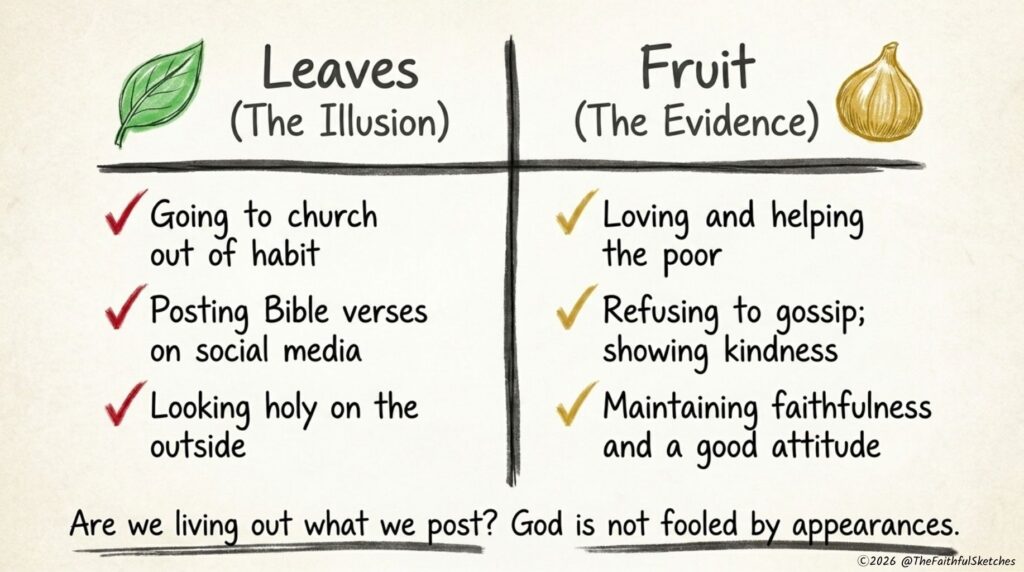
| The Fig Tree (Leaves Only) | Genuine Faith (Real Fruit) |
|---|---|
| Impressive outward appearance | Transformed inner heart |
| Religious activity and ritual | Love, kindness, and faithfulness |
| Designed to be seen by people | Lived out whether seen or not |
| Promises fruit but delivers none | Produces the fruit of the Spirit |
| Withered and rejected | Rooted, lasting, and alive |
Conclusion: Real Faith, Inside and Out
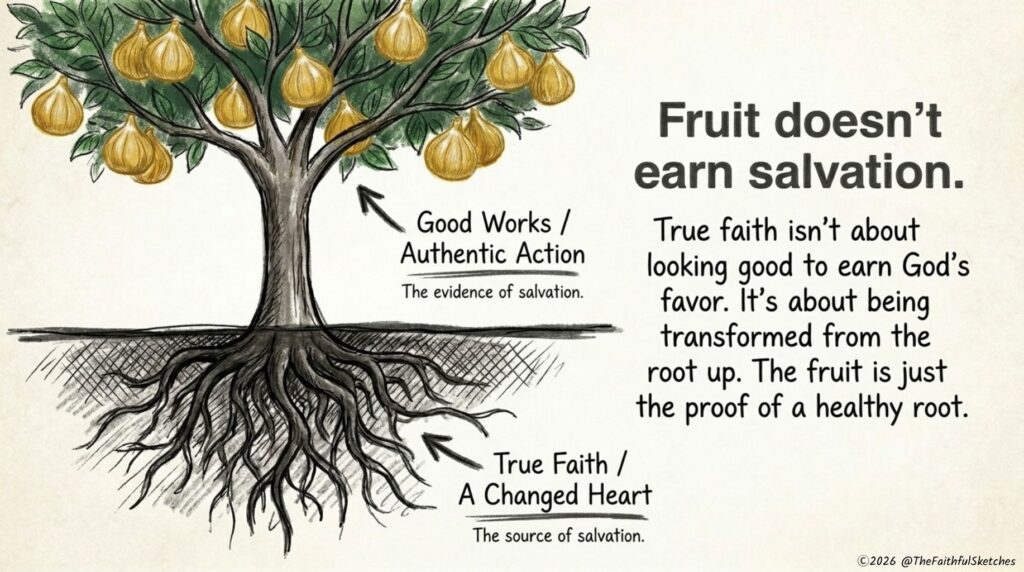
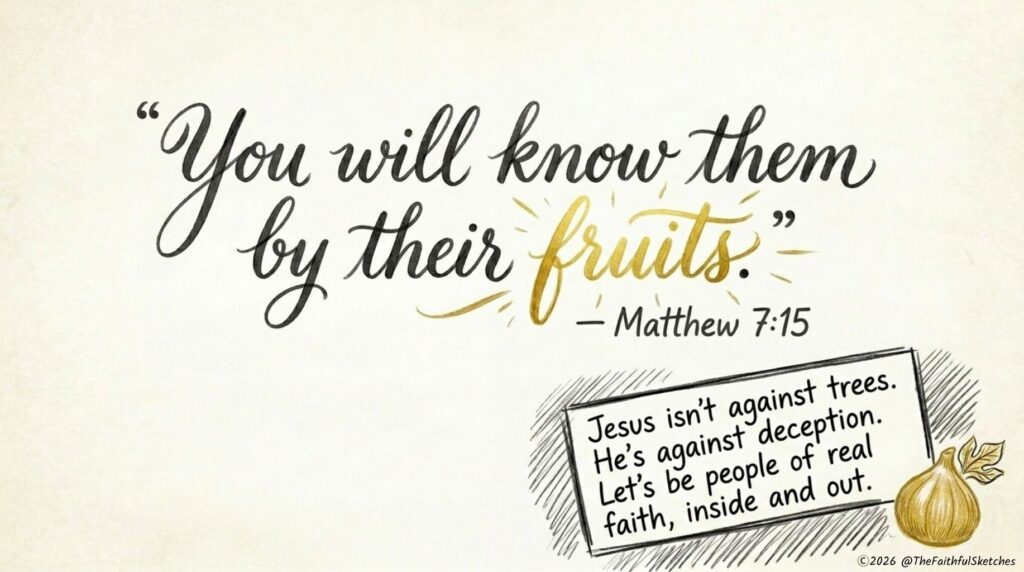
So why did Jesus curse the fig tree? Not because He was against trees, and not because He lost His temper over a missed snack. He was against deception, the gap between appearance and reality. The cursed fig tree stands as a warning against a faith that’s all show and no substance.
The call for us is simple but challenging. Let’s be people of real faith, genuine on the inside and the outside, living lives that actually reflect God’s goodness rather than just advertising it. If you’d like to keep exploring how Jesus taught hard truths, my post on the Book of Revelation explained looks at His final messages to the churches, several of which echo this same warning about fruitless faith. What fruit is God growing in your life right now? Let me know in the comments below.
Click Below to Download The Full PDF Summary Visual Guide:
*Free for personal use only. Please don’t resell or redistribute commercially.