
It usually happens late at night when the rest of the world is quiet. You are lying in bed, staring at the ceiling, and a terrifying thought slips into your mind: what if I’m wrong?
You think back to when you became a Christian. Maybe you walked down a church aisle as a child, wept at an altar during a summer youth camp, or prayed a sinner’s prayer at the back of a church. You were told that if you said those words and meant them, you were saved forever.
But then you look at your life today. You see the habits you still haven’t broken, the thoughts you still struggle to control, and the coldness you sometimes feel toward God when you read your Bible. If I am genuinely a new creation, why do I still feel so much like the old me? Did that prayer actually work?
If you have ever felt this specific anxiety, you are not alone. This is the single most common spiritual crisis Christians experience. The good news is that the Bible gives you a concrete way to answer it. This post walks through how to know you are saved using three objective tests from the book of 1 John.
Why Feelings Cannot Settle This Question
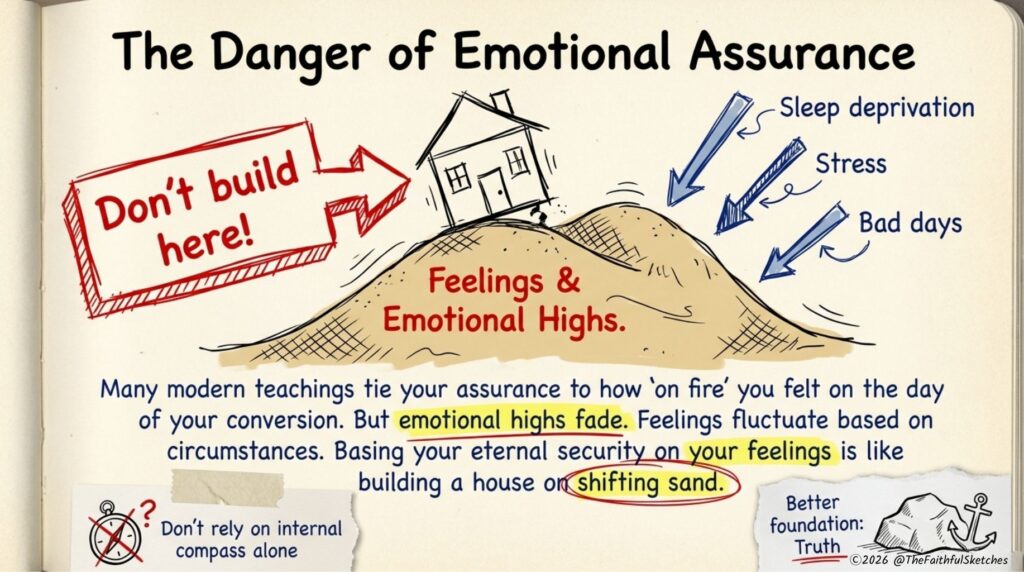
Many modern churches teach a version of assurance that depends entirely on your emotions. They tell you to look back at how “on fire” you felt on the day of your conversion. But emotional highs fade. Feelings fluctuate based on how much sleep you got or what kind of day you had.
Your eternal security needs a firmer foundation than that.
God never intended for you to live in constant panic about your soul. The New Testament includes an entire book written for the sole purpose of giving you a clear, objective checklist to evaluate your faith.
In 1 John 5:13, the Apostle John states his objective plainly: “I write these things to you who believe in the name of the Son of God, that you may know that you have eternal life.”
Notice his word choice. He doesn’t say “so that you can hope” or “so that you can feel.” He says “so that you may know.”
Intellectual Agreement vs Saving Faith
Before the three tests, one massive misconception needs clearing up: what the word “faith” actually means.
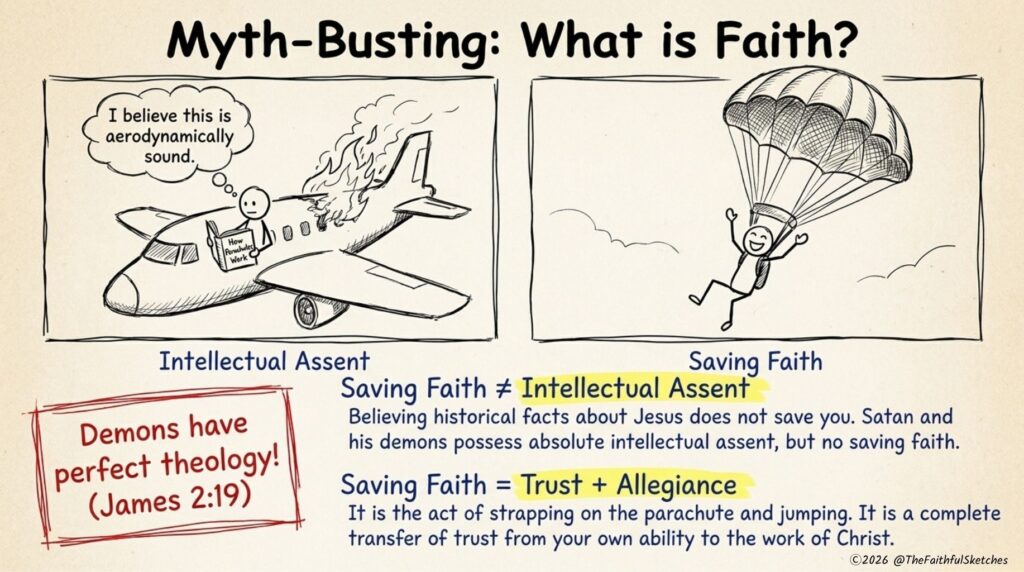
Many people confuse saving faith with intellectual assent. Intellectual assent means you believe certain facts are historically and doctrinally true. You believe God exists, Jesus died on a cross, and He rose from the dead. But mental agreement alone does not save you.
James delivers a blunt reality check in James 2:19: “You believe that God is one; you do well. Even the demons believe, and shudder!”
Satan and his demons possess perfect theology. They know exactly who Jesus is. They don’t doubt the resurrection; they witnessed it. Yet they do not have saving faith.
True saving faith, what the New Testament calls pistis, is a declaration of personal trust and allegiance to Jesus.
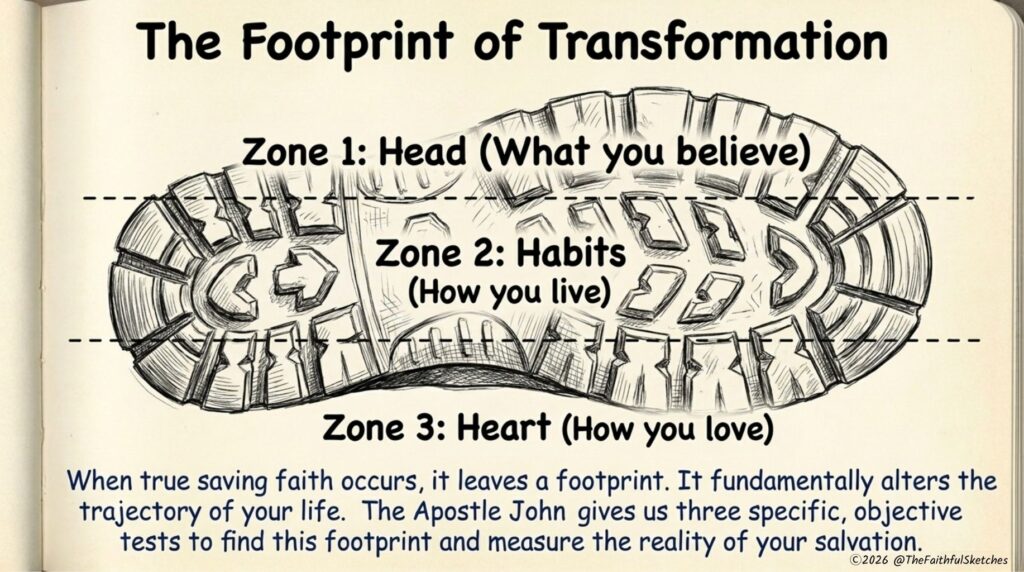
Picture a parachute on a burning plane. You can read the manual, study the physics, and believe with total certainty that the parachute will save you. Until you strap it on and jump, that belief does nothing. Saving faith is the act of strapping it on and jumping, a complete transfer of trust from your own ability to the work of Christ. When that transfer happens, it leaves a footprint on your life. John’s three tests check whether that footprint is present.
Test 1: The Theological Test (What You Believe)
The first test looks at the core object of your trust. Who do you say Jesus is, and what are you relying on to get you into heaven? John writes in 1 John 4:15, “Whoever confesses that Jesus is the Son of God, God abides in him, and he in God.”
To confess Jesus as the Son of God means you recognize your spiritual bankruptcy and acknowledge His authority over your life.
This test also exposes the hidden legalism behind most doubt. Ask a struggling Christian how they know they are saved, and they immediately look inward: “I haven’t been praying enough lately,” or “I lost my temper yesterday, so I don’t feel saved.” Do you see the error?
They are measuring salvation by their own moral performance, as if their entry into heaven were paid for by their own goodness with Jesus covering the deficit.
True saving faith looks outward. Paul states it clearly in Romans 10:9: confess Jesus is Lord, believe God raised Him from the dead, and you will be saved. So ask yourself the direct question. If you died tonight and God asked why He should let you into heaven, would you list your accomplishments and church attendance?
Or would your only defense be that Jesus Christ died for your sins and rose from the dead? If your honest answer is the death and resurrection of Jesus, you pass the theological test.
Test 2: The Moral Test (How You Live)
The second test moves faith from your head to your habits. Many people want a savior to rescue them from hell without a Lord who tells them how to live. John dismantles that idea in 1 John 2:3-4: “Whoever says ‘I know him’ but does not keep his commandments is a liar, and the truth is not in him.”
That sounds like a demand for sinless perfection. It isn’t, and John clarifies in the very first chapter. 1 John 1:8-9 says that anyone who claims to have no sin is self-deceived, and that God faithfully forgives those who confess.
John knows true Christians still struggle with sin. The moral test measures direction rather than perfection, the same distinction between stumbling and apostasy I covered in my post on whether you can lose your salvation.
A living apple tree produces apples naturally because it is alive. A dead stick with plastic apples tied on might look similar from a distance, but there is no life in it. So the real question is this: what happens inside you when you sin? An unbeliever can sin, enjoy it, and feel no internal conflict.
When a true believer sins, the Holy Spirit convicts them. They grieve, they want out of the mud, and they desire to confess and turn back to obedience. If you see a genuine desire to obey God and genuine sorrow when you fail Him, that is spiritual fruit, and you pass the moral test.
Test 3: The Social Test (How You Love)
The final test measures how your relationship with God changes your relationships with people. When you are born again, you receive a new heart with new affections, and one of the first signs is a supernatural love for the family of God.
John writes in 1 John 3:14, “We know that we have passed out of death into life, because we love the brothers.” Jesus gave the same metric in John 13:35: love for one another marks His disciples.
Before you knew Christ, your relationships likely ran on utility, convenience, or shared interests. You loved people who looked like you, thought like you, and could do things for you. True saving faith produces a sacrificial love for believers you have nothing else in common with, politically, culturally, or socially. You find yourself drawn to the church. You want to serve them and bear their burdens.
If you genuinely care about the body of Christ and desire real Christian fellowship, your old selfish nature could never produce that on its own. It is a sign of life, and you pass the social test.
The Internal Witness of the Spirit
Beyond these three external tests, one internal reality provides deep assurance. Theologians call it the Witness of the Spirit. When you enter covenant with God, you get more than a judge who clears your record. You get a Father who adopts you. Paul describes it in Romans 8:15-16: “you have received the Spirit of adoption as sons, by whom we cry, ‘Abba! Father!'” Abba is an intimate Aramaic term, close to “Papa” or “Dad.”
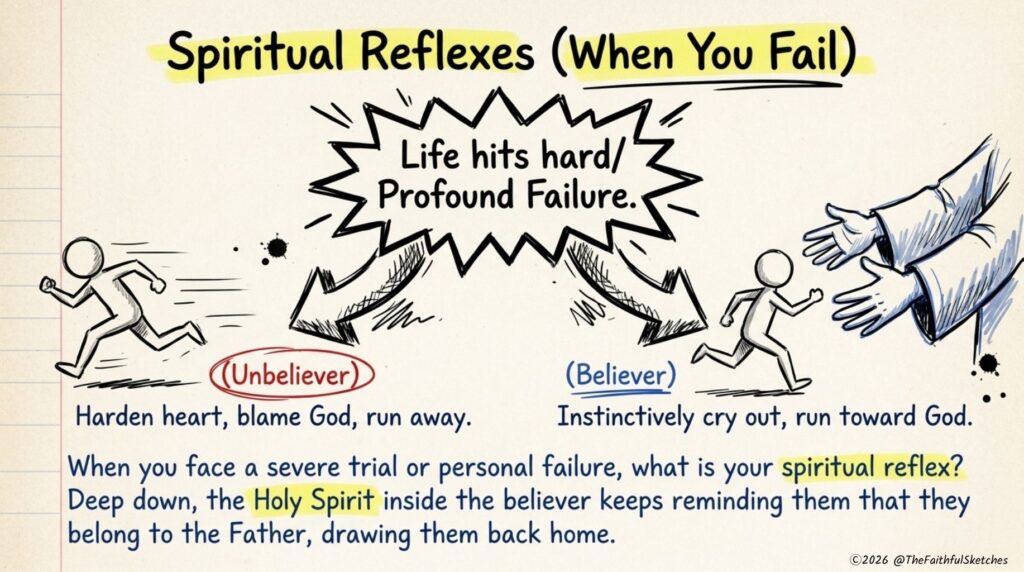
Here is a practical way to see this in your own life. When a severe trial, a tragedy, or a moment of deep failure hits, what is your spiritual reflex? A person without Christ runs away from God, hardens their heart, and blames Him. A true child of God, even hurting and confused, instinctively runs toward God. They cry out to Him because the Holy Spirit inside keeps reminding them that they belong to the Father.
The Three Tests at a Glance
| Test | The Question | The Passing Sign |
|---|---|---|
| Theological | What are you trusting for salvation? | Your only defense is the death and resurrection of Jesus, not your performance |
| Moral | What happens inside you when you sin? | A pattern of growth in obedience, plus grief and repentance when you fail |
| Social | How do you treat God’s family? | Genuine, sacrificial love for other believers and a pull toward fellowship |
Direction, Not Perfection
Lay these three tests over your life and look at the overall trajectory, not a single snapshot of a bad day. A compass needle shakes in a storm, yet it still points north. If these three signs are present in your life, even in small and imperfect form, your faith is real. You are truly saved.
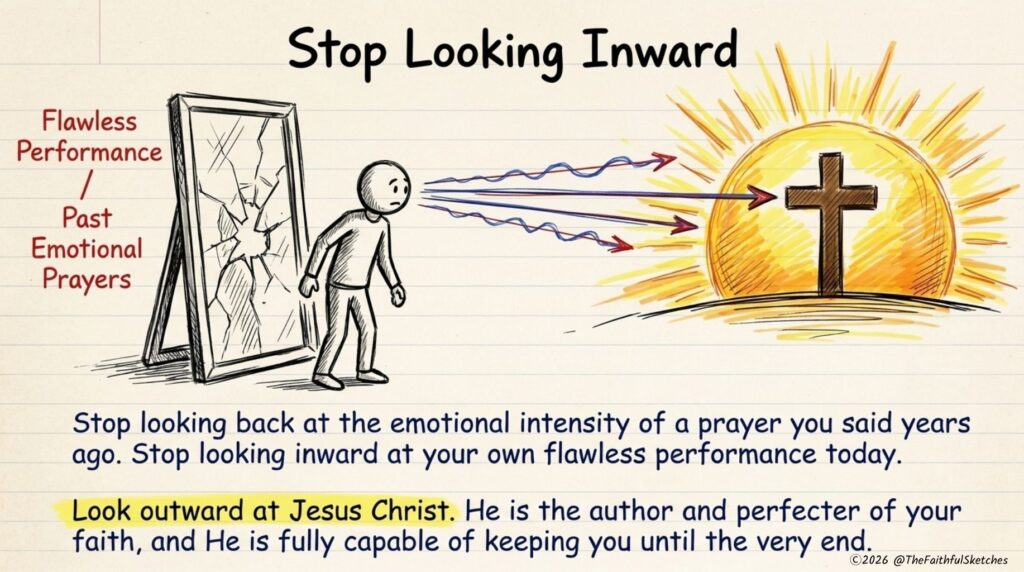
So stop looking back at the emotional intensity of a prayer you said years ago, and stop measuring your standing by today’s flawless performance. Look at Jesus Christ. He is the author and perfecter of your faith, and He is fully capable of keeping you until the very end.
If the question behind this post is whether a believer can ever walk away, read the companion piece on Can You Lose Your Salvation, and for the popular half-truths that feed this anxiety, see the Top 10 Lies Christians Believe.
Which of the three tests speaks most to where you are right now? Leave a comment below and encourage someone else stuck in the same cycle of spiritual anxiety.
Click Below to Download The Full PDF Summary Visual Guide:
*Free for personal use only. Please don’t resell or redistribute commercially.