
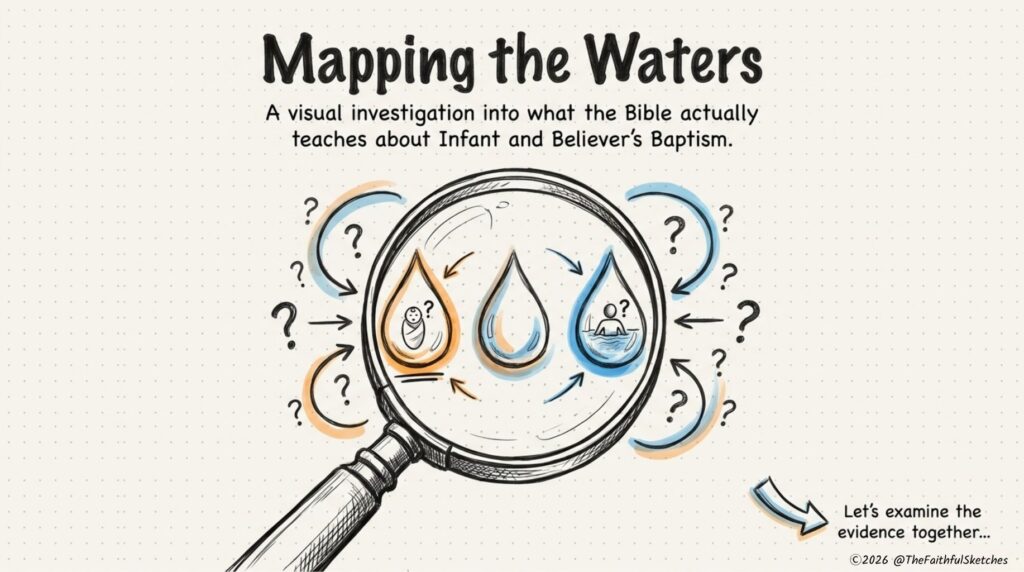
One Christian practice has generated discussion for nearly two thousand years: infant baptism. Some churches baptize infants shortly after birth. Others reserve baptism for those old enough to personally confess faith in Jesus Christ.
At first glance, this might seem like a minor disagreement. After all, both groups believe in Jesus, love the Bible, and desire to obey God. But the question matters because Christ Himself commanded baptism.
If God commands infants to be baptized, Christians should gladly practice it. If He does not, then no church tradition, family custom, or historical practice can add something Scripture has not required. So should infants be baptized?
The real question is what the Bible teaches. Let’s examine the evidence together.
What Is Baptism?
Before discussing who should be baptized, we need to understand what baptism is. In the New Testament, baptism is a public declaration of identification with Jesus Christ. It’s an outward act pointing to an inward reality.
Baptism does not save a person. Rather, it publicly proclaims that a person belongs to Christ. Throughout the New Testament, baptism connects closely with faith, repentance, discipleship, and obedience. For that reason, the infant baptism question ultimately becomes a question about who baptism was designed for.
The Two Main Christian Views
Christians have generally held one of two positions.
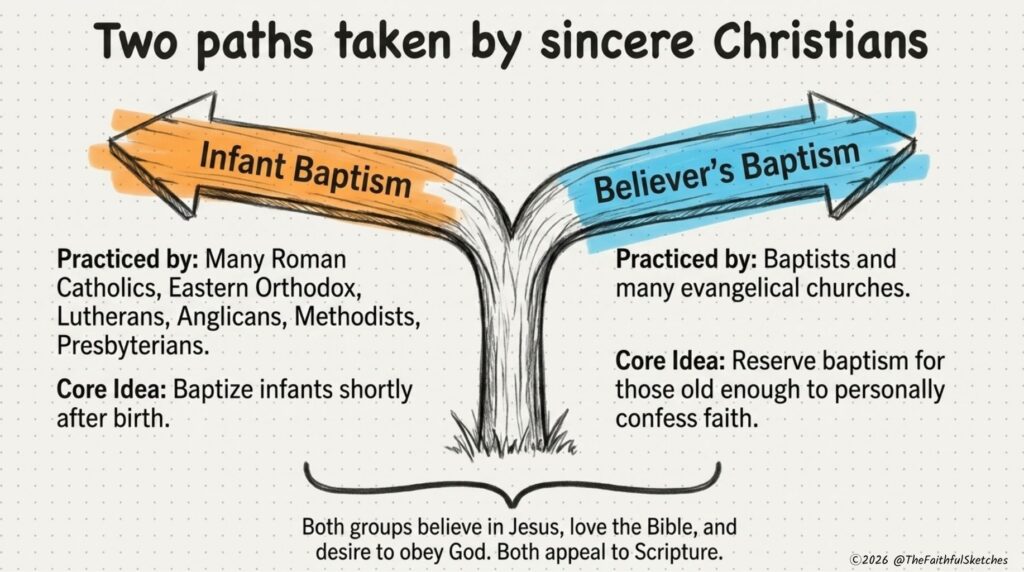
Many Roman Catholics, Eastern Orthodox Christians, Lutherans, Anglicans, Methodists, and Presbyterians practice infant baptism. They believe children of believers should receive the covenant sign of baptism, much like infant boys received circumcision under the Old Covenant.
Baptists and many evangelical churches teach believer’s baptism, reserving baptism for those who personally repent, believe the gospel, and confess Christ. They argue that every clear example of baptism in the New Testament follows personal faith.
While sincere Christians disagree here, both sides appeal to Scripture as their authority. If you want the bigger map of which churches hold which view, see my post on Christian denominations explained.
Christ Commanded the Baptism of Disciples
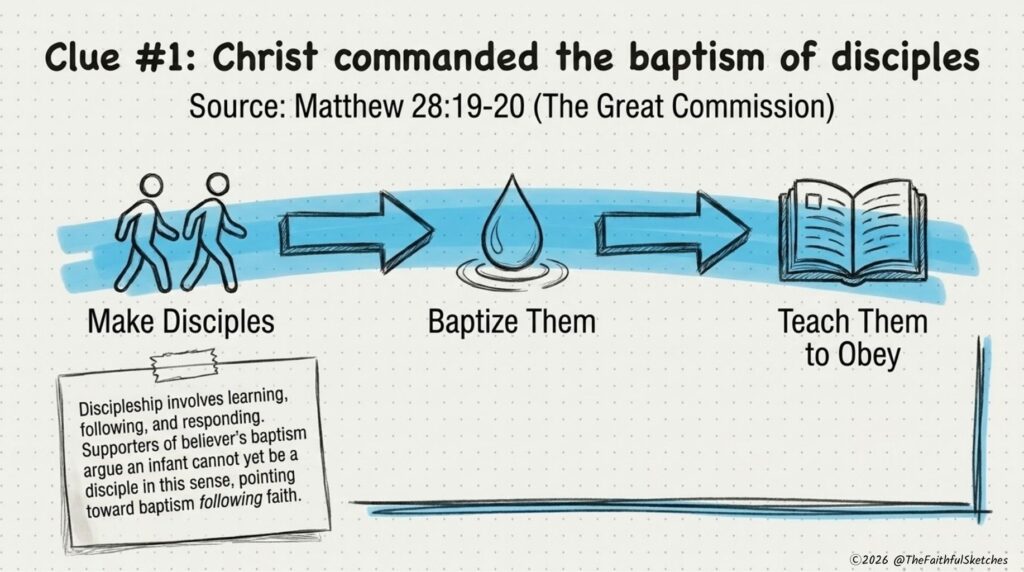
The clearest starting point is the Great Commission. Jesus said in Matthew 28:19-20, “Go therefore and make disciples of all nations, baptizing them in the name of the Father and of the Son and of the Holy Spirit, teaching them to observe all that I have commanded you.”
Notice the sequence. First, disciples are made. Second, those disciples are baptized. Third, they are taught to obey Christ. Baptism is tied to discipleship. Jesus did not command His followers to baptize everyone indiscriminately.
He commanded them to baptize disciples. Those who support believer’s baptism argue that an infant cannot yet become a disciple in this sense, because discipleship involves learning, following, and responding to Christ.
For that reason, they conclude the Great Commission points toward baptism following faith rather than preceding it.
The Pattern of Baptism in Acts
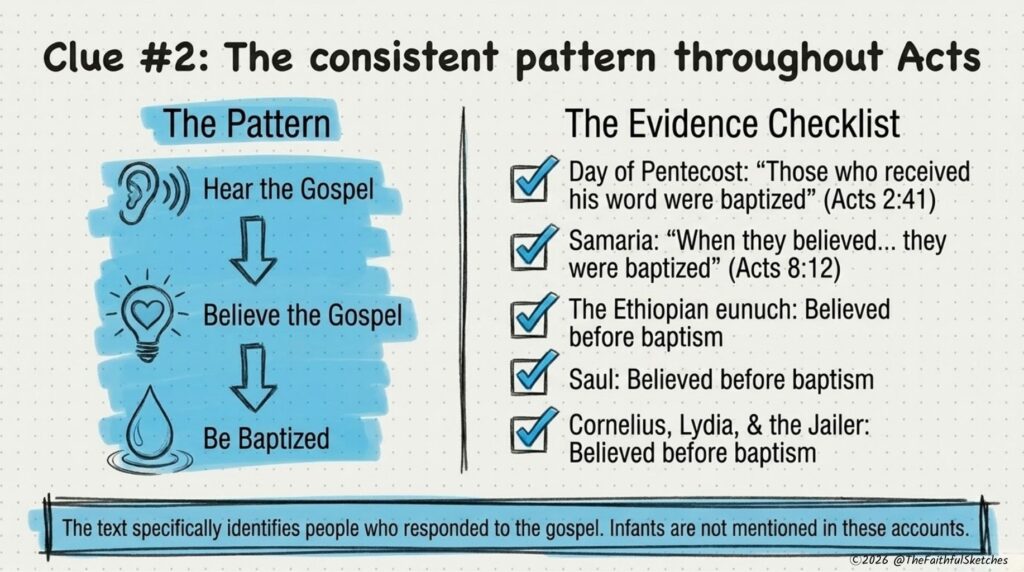
The book of Acts records how the apostles carried out Christ’s command, and the pattern appears remarkably consistent. People hear the gospel. They believe the gospel. Then they are baptized.
On the Day of Pentecost, Peter preached Christ’s death and resurrection, and Acts 2:41 records, “those who received his word were baptized.” Who was baptized? Those who received the message.
The text identifies people who responded to the gospel and mentions no infants. The same pattern appears in Samaria in Acts 8:12: the gospel was preached, people believed, and then they were baptized, both men and women.
The pattern keeps repeating. The Ethiopian eunuch believed before baptism. Saul believed before baptism. Cornelius, Lydia, and the Philippian jailer all believed before baptism. Throughout Acts, baptism consistently follows a response of faith.
What Does Baptism Symbolize?
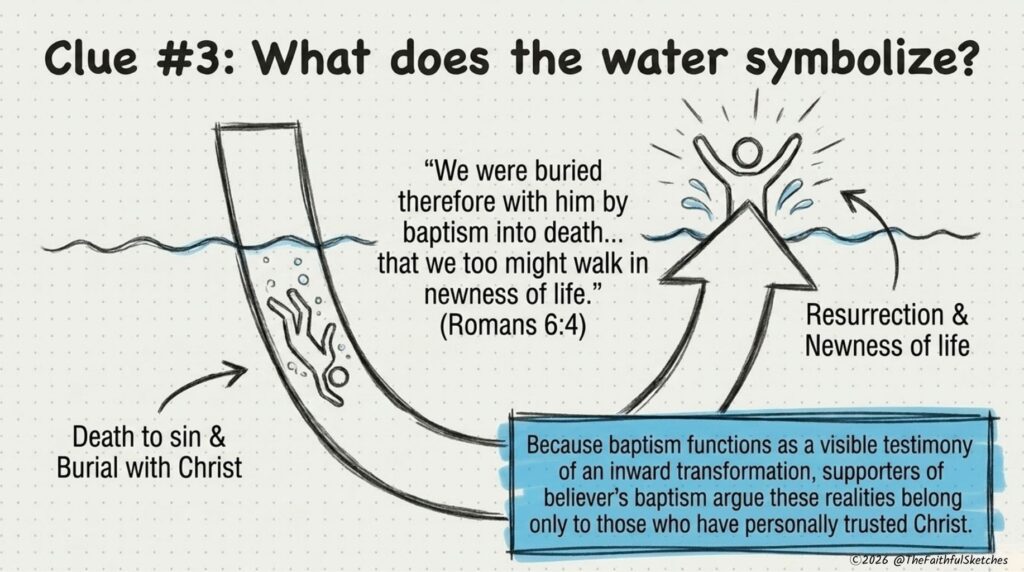
The meaning of baptism matters too. Paul writes in Romans 6:3-4 that all who were baptized into Christ were baptized into His death, buried with Him, and raised to walk in newness of life.
According to Paul, baptism symbolizes profound spiritual realities: union with Christ, death to sin, burial and resurrection with Him, and a new life empowered by God. Supporters of believer’s baptism argue these realities belong to those who have personally trusted Christ. On that reading, baptism functions as a visible testimony of an inward transformation already experienced through faith.
The Circumcision Argument
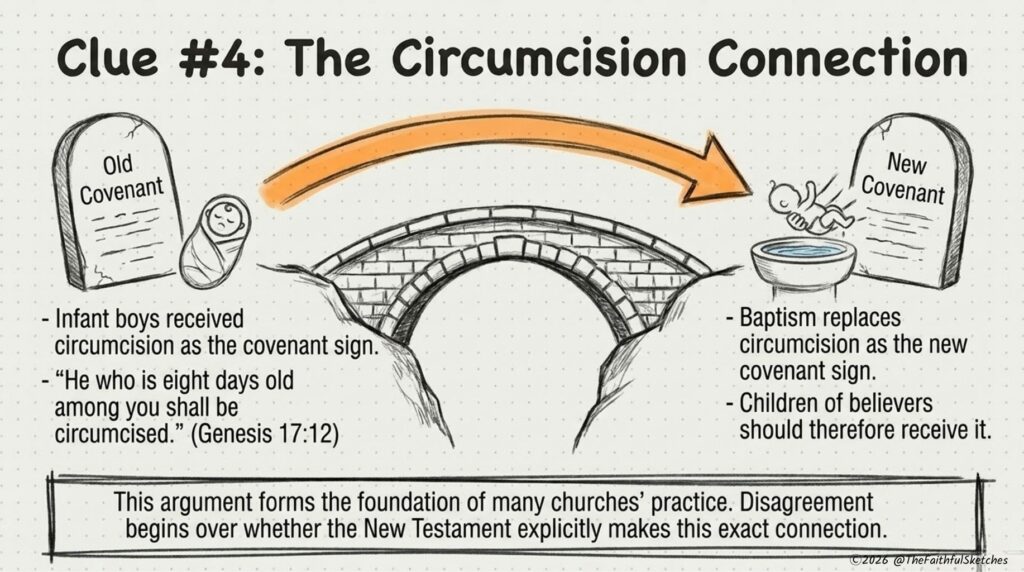
Now for the strongest argument on the other side. Under the Old Covenant, infant boys received circumcision as the covenant sign. God commanded Abraham in Genesis 17:12, “He who is eight days old among you shall be circumcised.”
Those who support infant baptism argue that baptism has replaced circumcision as the covenant sign. Since infants received the covenant sign under the Old Covenant, they believe infants should receive it under the New Covenant too.
This argument deserves serious consideration, because it forms the foundation of many churches’ practice, and it flows from the covenant framework I explain in my post on what covenant theology is.
But does the New Testament explicitly make this circumcision-to-baptism connection? That’s exactly where the disagreement begins.
Household Baptisms: Do They Include Infants?
Another common argument points to household baptisms. Several passages mention entire households being baptized: Lydia’s household, the Philippian jailer’s household, and the household of Stephanas. At first glance, some conclude infants must have been included.
However, the passages never specifically mention infants. In fact, the account of the Philippian jailer says in Acts 16:32 that Paul and Silas “spoke the word of the Lord… to all who were in his house,” and Acts 16:34 adds that the jailer “rejoiced along with his entire household that he had believed in God.”
Those who reject infant baptism argue these descriptions suggest household members were old enough to hear the gospel and respond. Honestly, the household passages don’t settle the debate, because neither side can prove exactly who was present.
The New Covenant and Spiritual Birth
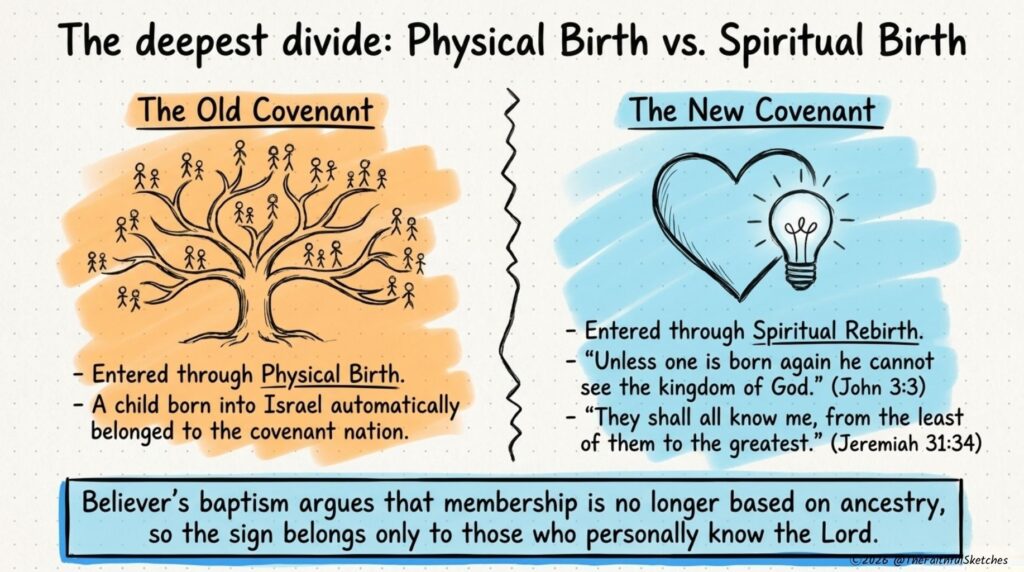
Perhaps the most significant difference between the two views concerns the nature of the New Covenant itself. Under the Old Covenant, people entered the covenant community through physical birth. A child born into Israel automatically belonged to the covenant nation.
The New Covenant emphasizes something different. Jesus said in John 3:3, “unless one is born again he cannot see the kingdom of God.” Membership in God’s people no longer rests on ancestry but on spiritual rebirth. Jeremiah’s prophecy of the New Covenant in Jeremiah 31:34 says, “they shall all know me, from the least of them to the greatest.”
Supporters of believer’s baptism argue that every member of the New Covenant personally knows the Lord, so the covenant sign should go only to those who have personally embraced Christ through faith. This connects to the larger debate over how the covenants relate, which I cover in covenant theology vs dispensationalism.
Both Sides at a Glance
Here’s an honest summary of why each side holds its position.
| Infant Baptism | Believer’s Baptism | |
|---|---|---|
| Who practices it | Catholic, Orthodox, Lutheran, Anglican, Methodist, Presbyterian | Baptist and many evangelical churches |
| Core argument | Baptism replaces circumcision as the covenant sign | Every explicit New Testament baptism follows faith |
| Supporting evidence | Covenant continuity, household baptisms, church history | The Great Commission sequence, the pattern in Acts, the symbolism of Romans 6 |
| View of the covenant | Children of believers belong in the visible covenant community | New Covenant members personally know the Lord |
| Main weakness | No verse directly commands or describes an infant baptism | Household passages leave some ambiguity |
A Biblical View of Children
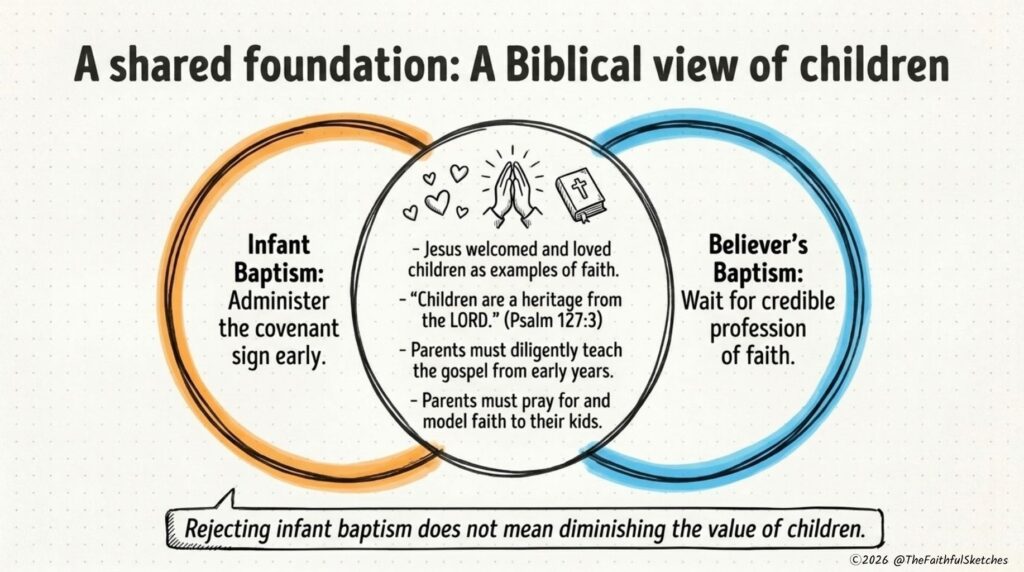
One thing needs saying clearly. Rejecting infant baptism does not mean diminishing the value of children. Jesus welcomed children, loved them, and used them as examples of humility and faith. Psalm 127:3 declares, “children are a heritage from the LORD.”
Christian parents are called to teach their children diligently, pray for them, model faith before them, and share the gospel with them from their earliest years. And when those children personally trust in Christ, parents should joyfully encourage them to follow Him in baptism.
Conclusion: Follow the Word Wherever It Leads
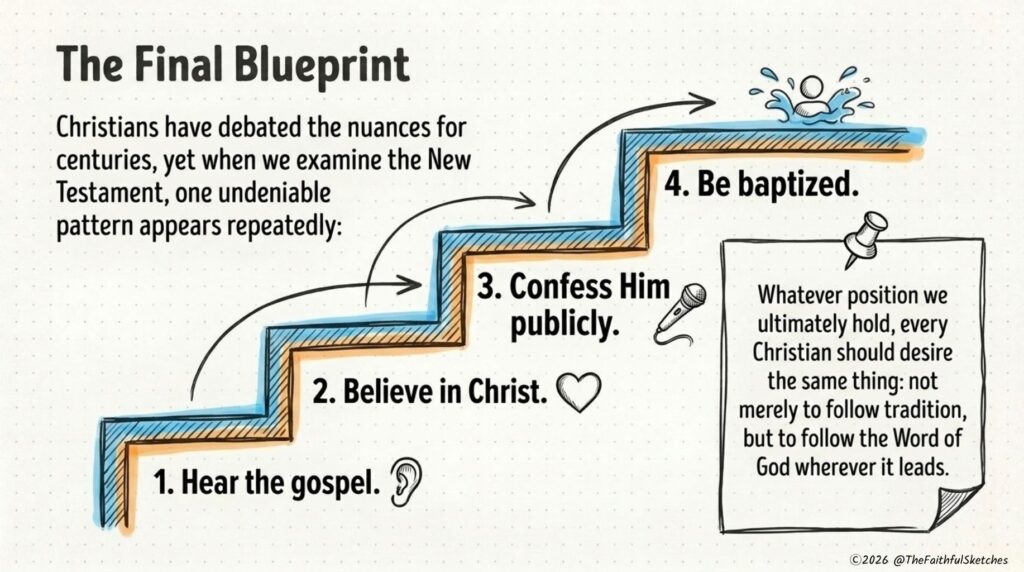
So should infants be baptized? Christians have answered differently for centuries, and this post has tried to give both positions their strongest form. Yet when we examine the New Testament, one pattern appears repeatedly. The gospel is preached. People believe. People publicly identify with Christ. Then they are baptized.
Jesus commanded disciples to be baptized. The apostles baptized those who received the message. Baptism symbolizes union with Christ, forgiveness of sins, and new life in Him.
For these reasons, many Christians conclude baptism is intended for those who have personally repented and trusted in Jesus Christ. The biblical pattern comes down to four steps: hear the gospel, believe in Christ, confess Him publicly, and be baptized.
Whatever position you ultimately hold, every Christian should want the same thing: not merely to follow tradition, but to follow the Word of God wherever it leads.
Which view were you raised in, and has your position changed? Let me know in the comments below.
Click Below to Download The Full PDF Summary Visual Guide:
*Free for personal use only. Please don’t resell or redistribute commercially.