
Today we’re diving into one of the most talked-about and debated topics in Christianity: Calvinism. Most people have heard the word, but what is Calvinism really, and what does it actually mean to be a Calvinist?
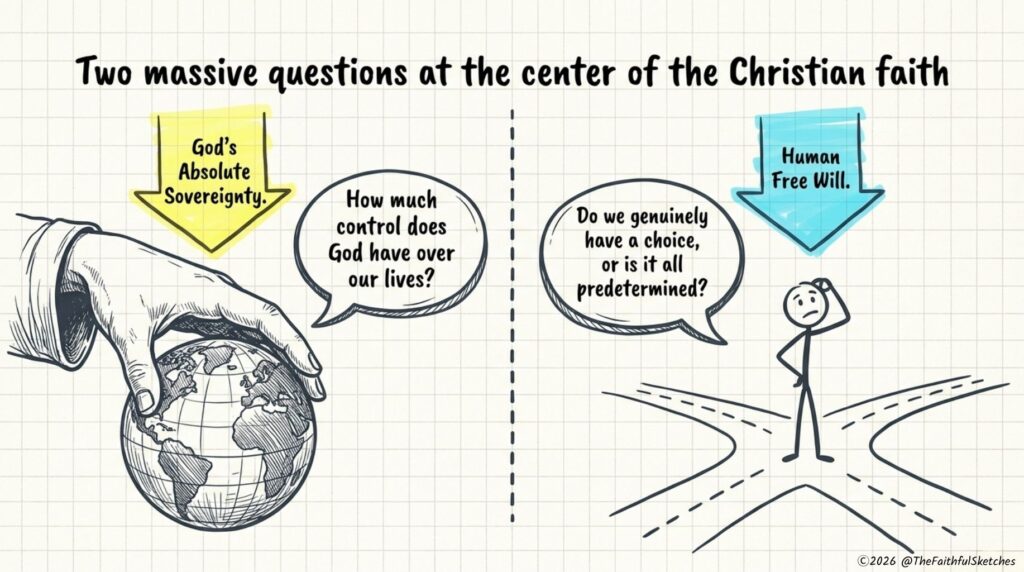
In this post, we’ll explore who Calvinists are, what they believe, the key Bible verses they use, their history and influence, and some of the famous people who held to this theology. Along the way, you’ll pick up a few interesting facts that many people don’t know. So if you’ve ever asked what is Calvinism without getting a clear answer, this is for you.
The Story Begins: Who Was John Calvin?
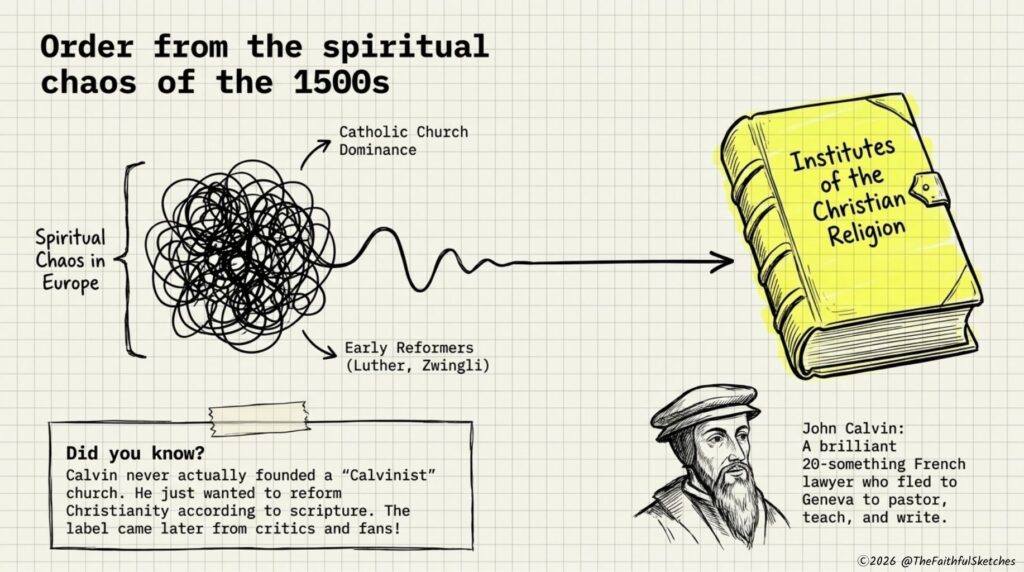
It all started in the 1500s during the Protestant Reformation. Europe was in spiritual upheaval. The Catholic Church dominated religion, but reformers like Martin Luther and Ulrich Zwingli were calling people back to the Bible.
Then came John Calvin, a brilliant French lawyer and theologian. He was only in his 20s when he fled France because of his Protestant beliefs and eventually settled in Geneva, Switzerland. There he became a pastor, teacher, and writer. His most famous work, The Institutes of the Christian Religion, remains one of the most influential theology books ever written. Calvin emphasized that God is sovereign, meaning He rules over everything, creation, history, and salvation itself.
Interesting Fact #1:
John Calvin never actually founded a “Calvinist church.” He simply wanted to reform Christianity according to Scripture. Both followers and critics applied the label “Calvinist” later. For the wider tradition that grew out of his work, see my post on Reformed theology and Calvinism.
What Calvinists Believe: The Five Points of TULIP
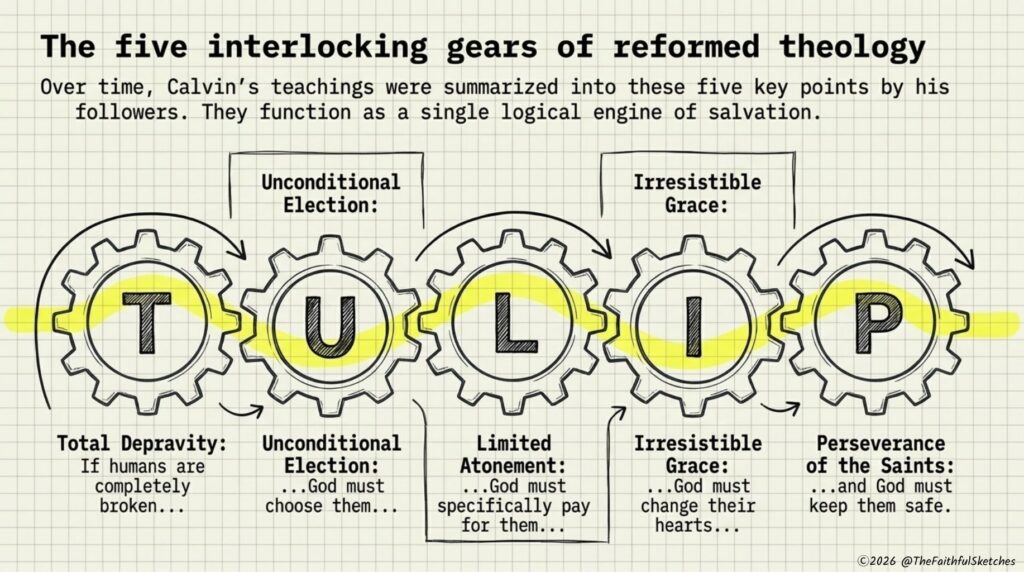
Over time, Calvin’s teachings were summarized into five key points known as the Five Points of Calvinism, or the acronym TULIP. Let’s go through each one slowly, with the Bible verses, the logic, and a few lesser-known details.
T: Total Depravity
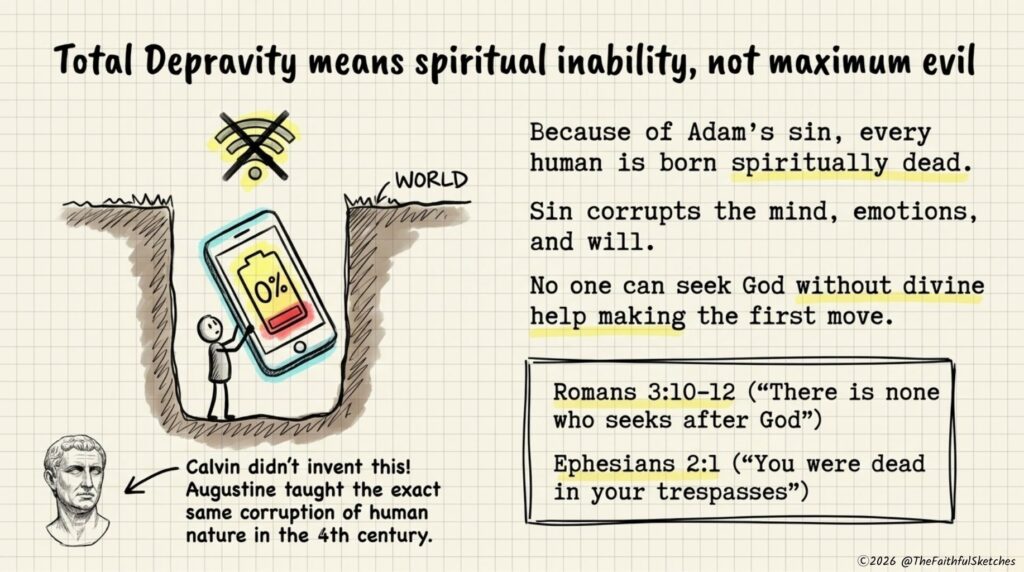
Calvinists believe that because of Adam’s sin, every human being is born spiritually dead, unable to seek God or choose Him without divine help. They point to Romans 3:10-12, “There is none righteous, no, not one,” and Ephesians 2:1, “you were dead in the trespasses and sins.”
To Calvinists, this doesn’t mean humans are as evil as possible. It means sin affects every part of our nature: mind, emotions, and will. So no one can come to God unless God makes the first move.
Interesting Fact #12
Calvin didn’t invent this idea, though. Augustine, a church father from the 4th century, also taught that human nature was corrupted and that salvation depends entirely on God’s grace.
U: Unconditional Election
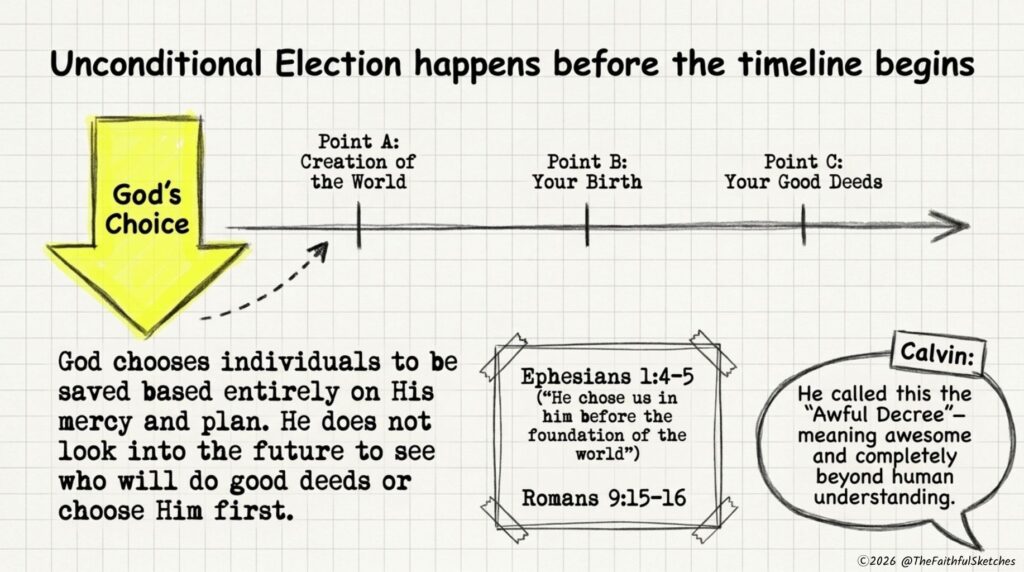
Calvinists believe God chose certain individuals to be saved, not based on any future good deeds, but entirely on His mercy and plan. Their key verses include Ephesians 1:4-5, “He chose us in him before the foundation of the world,” and Romans 9:15-16, “it depends not on human will or exertion, but on God, who has mercy.”
In other words, God’s choice is unconditional. He doesn’t look into the future to see who will choose Him. He chooses first.
Interesting Fact #13
Calvin called this doctrine “the awful decree,” not because it’s bad, but because it’s awesome in the old sense of the word, beyond human understanding. My post on predestination and free will digs into this tension further.
L: Limited Atonement
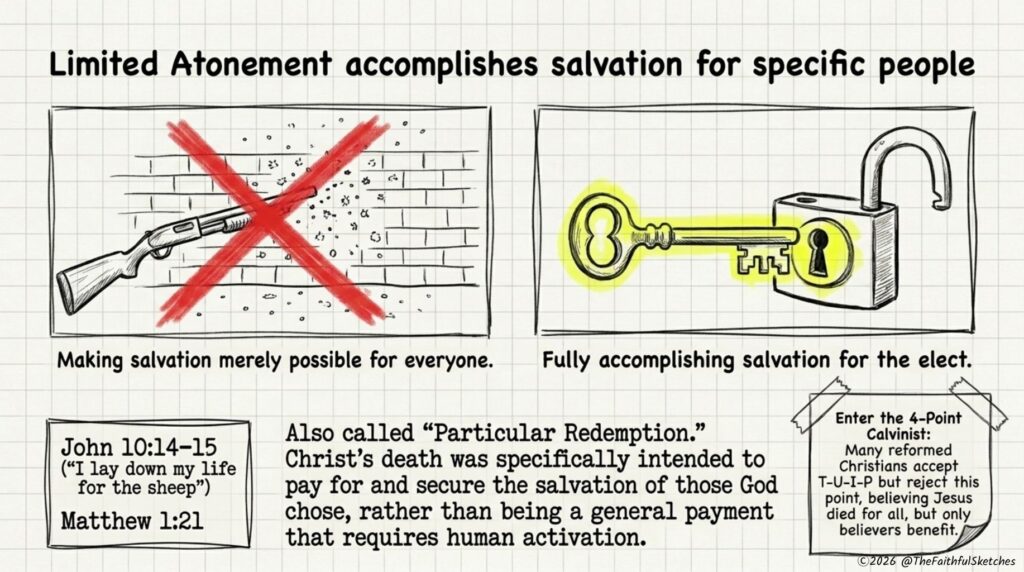
Also called Particular Redemption, this point teaches that Jesus died specifically for the elect, those God chose to save. Calvinists believe Christ’s death fully accomplished salvation for those people rather than merely making it possible for everyone. They cite John 10:14-15, “I lay down my life for the sheep,” and Matthew 1:21, “he will save his people from their sins.”
They argue that if Jesus paid for everyone’s sins, then everyone would be saved. Since not all are saved, His atonement must have been intended for the elect.
Interesting Fact #4:
Not all Reformed Christians agree here, though. Some call themselves “Four-Point Calvinists,” accepting every point except Limited Atonement, believing Jesus died for all but only believers benefit.
I: Irresistible Grace
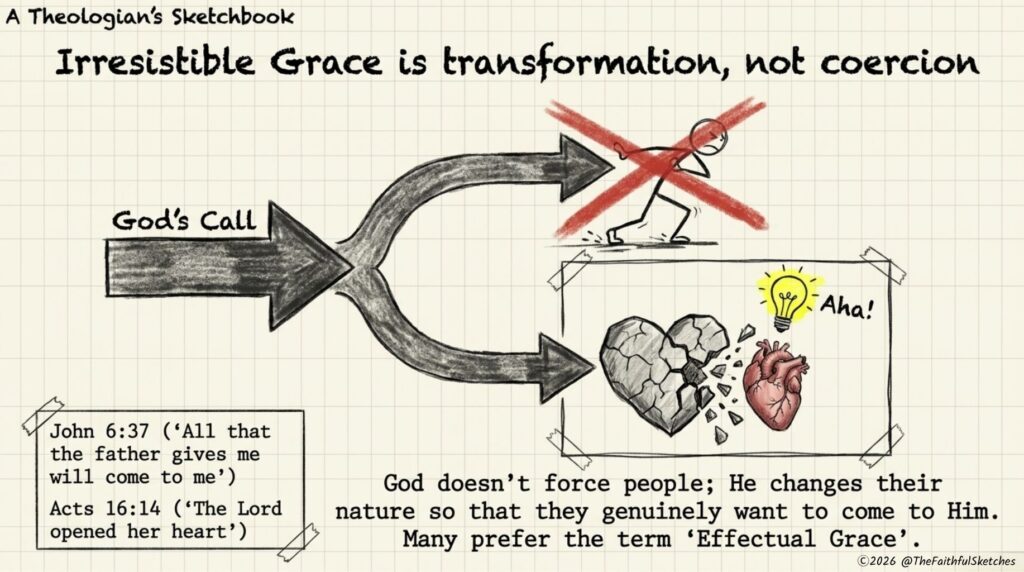
This is the belief that when God calls someone to salvation, His grace cannot be resisted. It’s not that He forces people. It’s that He changes their heart so they want to come to Him. Calvinists cite John 6:37, “All that the Father gives me will come to me,” and Acts 16:14, where “the Lord opened her heart” to respond to Paul’s message.
Calvinists see this as a beautiful picture of divine love, that God’s call is effective, not just an invitation but a transformation.
Interesting Fact #5:
Many Calvinists prefer to call it “Effectual Grace,” emphasizing not coercion but God’s power to truly change a heart.
P: Perseverance of the Saints
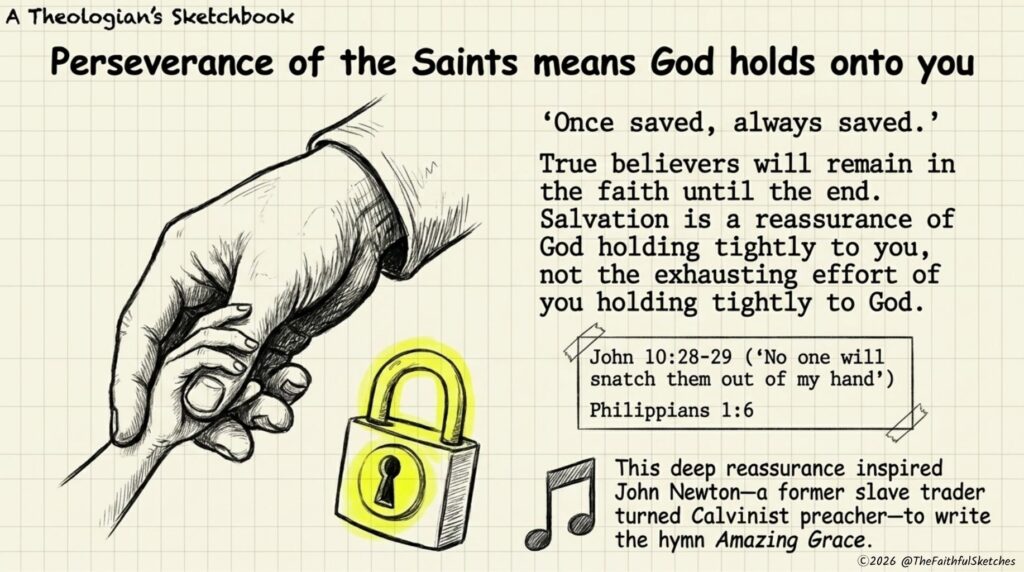
Finally, Calvinists believe that those whom God has truly saved will remain in the faith until the end. In short, “once saved, always saved.” They cite John 10:28-29, “no one will snatch them out of my hand,” and Philippians 1:6, “he who began a good work in you will bring it to completion.”
Calvinists see this as reassurance that salvation isn’t about you holding tightly to God. It’s about God holding tightly to you.
Interesting Fact #6:
This doctrine inspired hymns like “Amazing Grace,” written by John Newton, a former slave trader turned preacher and a committed Calvinist.
Famous Calvinists Through History
Over the centuries, Calvinism spread across Europe and into America. Some of the most influential Christians in history were Calvinists.
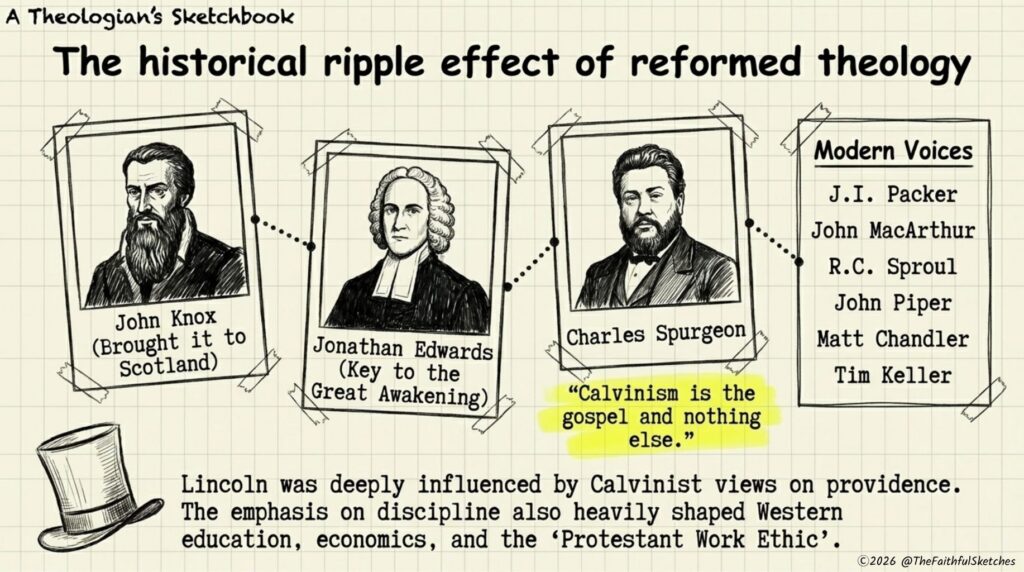
John Knox was the fiery reformer who brought Calvinism to Scotland. Jonathan Edwards preached “Sinners in the Hands of an Angry God” and was central to the Great Awakening. Charles Spurgeon, known as the “Prince of Preachers,” famously called Calvinism the gospel itself. George Whitefield, the famous evangelist, worked alongside John Wesley even though they disagreed sharply on predestination.
More recent theologians shaped by Reformed teaching include J.I. Packer, John MacArthur, R.C. Sproul, John Piper, Matt Chandler, and Tim Keller. Even Abraham Lincoln was deeply influenced by Calvinist thought about providence and human nature.
Interesting Fact #7:
Calvin’s influence reached far beyond theology, too. His emphasis on personal responsibility and discipline shaped parts of Western culture, education, and even economics, sometimes called the “Protestant work ethic.”
Common Criticisms and Alternative Views
Not everyone agrees with Calvinism. Many Christians, often called Arminians, believe God gives everyone genuine freedom to accept or reject His grace. They point to John 3:16, “For God so loved the world,” 1 Timothy 2:3-4, “God desires all people to be saved,” and 2 Peter 3:9, “not wishing that any should perish.”
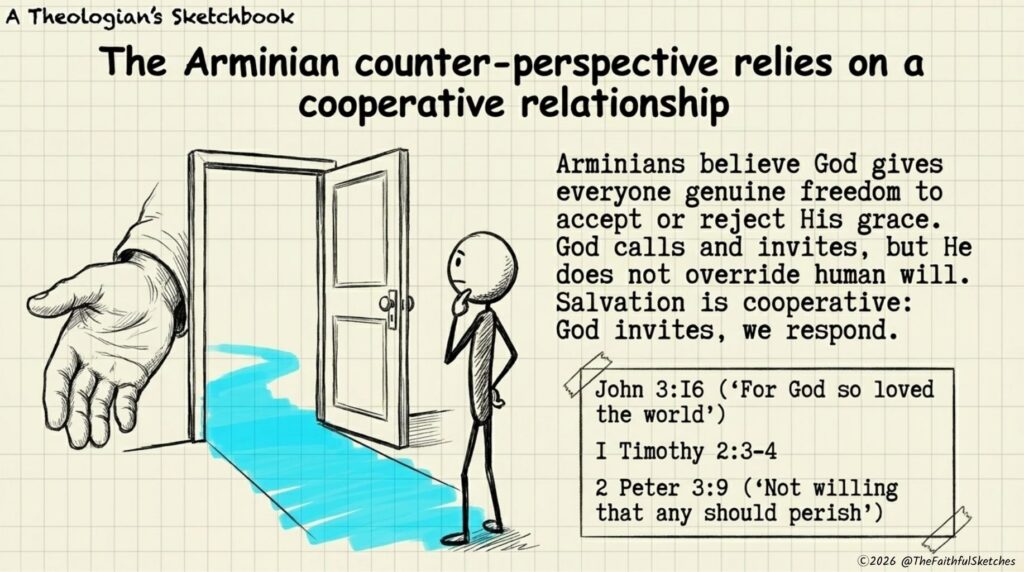
Arminians argue that God’s grace can be resisted, that He invites all but doesn’t override human will. They see salvation as a cooperative relationship: God calls, and we respond. For a full side-by-side breakdown, read my post on Calvinism vs Arminianism.
Variations Within Calvinism
Even within Calvinism, there are variations. Some emphasize “double predestination,” the idea that God also actively passes over those who are not chosen. Others focus more on God’s love and mystery, avoiding speculation about who’s “in” or “out.” Here’s a quick comparison of the main camps.
| View | Key Distinctive | Where It Differs |
|---|---|---|
| Five-Point Calvinism | Holds all of TULIP | Standard Reformed position |
| Four-Point Calvinism | Rejects Limited Atonement | Christ died for all, only believers benefit |
| Double Predestination | God elects and actively reprobates | Stronger view of God’s decree over the lost |
| Arminianism | Resistible grace, conditional election | Salvation is cooperative, can be lost |
Interesting Fact #8:
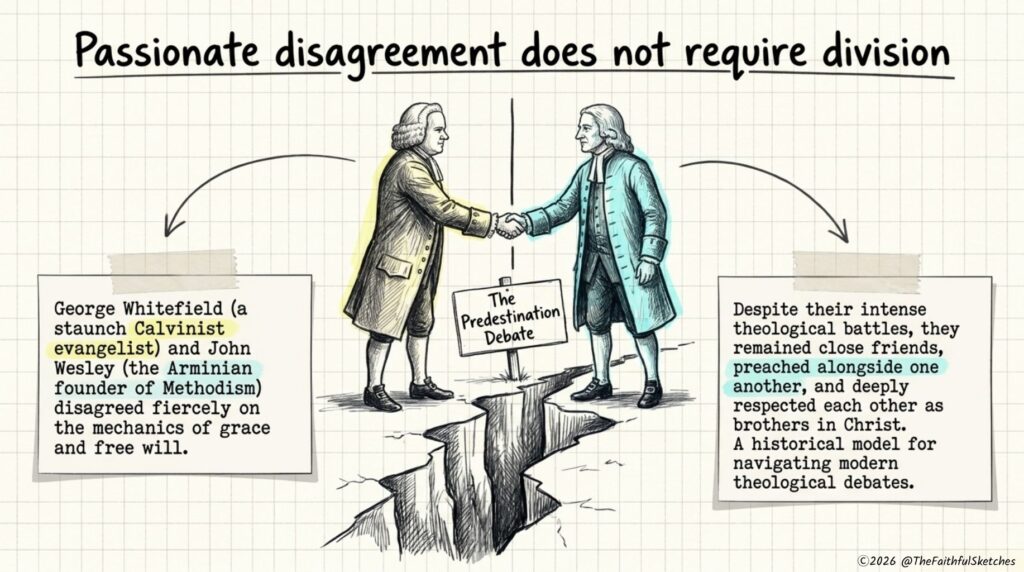
John Wesley, the founder of Methodism, was close friends with the Calvinist preacher George Whitefield. They disagreed passionately but still respected each other as brothers in Christ.
If you want to see how far some Calvinists push the system, my post on Calvinism vs Hyper-Calvinism covers that ground.
Why Calvinism Still Matters Today
So why does Calvinism still matter? Because it raises questions that go straight to the heart of faith. How much control does God have over our lives? How do grace and free will fit together? Can we lose salvation, or does God truly keep us secure?
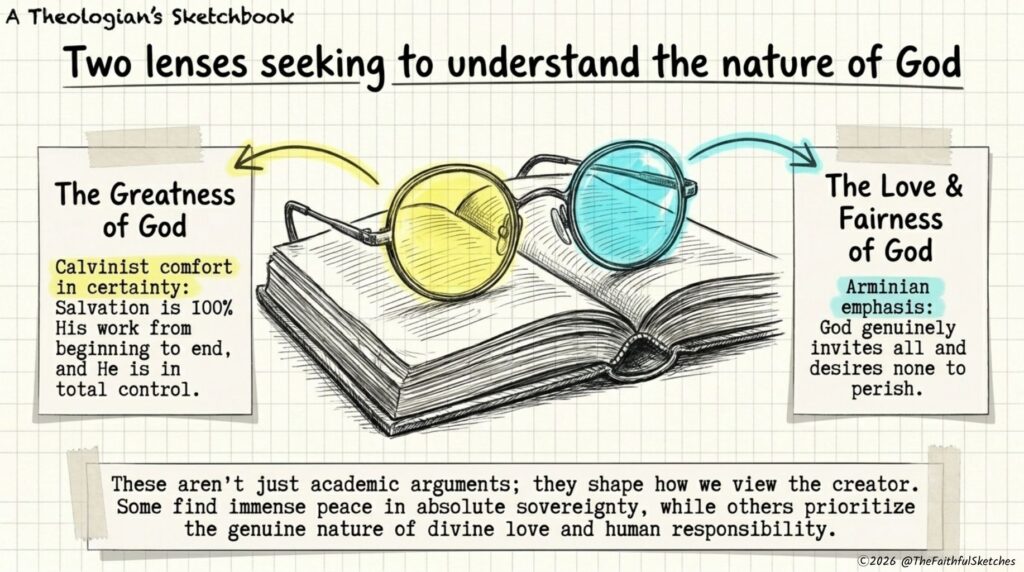
Calvinists emphasize the greatness of God, that salvation is entirely His work from beginning to end. Others emphasize the love and fairness of God, that He invites all and desires none to perish. Both sides are wrestling honestly with the same Scriptures.
Conclusion

So that’s Calvinism: its history, beliefs, Bible verses, controversies, and impact. Some find comfort in its certainty. Others struggle with its implications. Whichever way you lean, exploring these questions can deepen your understanding of Scripture, sharpen how you think about who God is and how His grace works, and strengthen your relationship with Him.
Click Below to Download The Full PDF Summary Visual Guide:
*Free for personal use only. Please don’t resell or redistribute commercially.