
It’s been called rigid and harsh. People have blamed it for killing missionary zeal and for making God out to be a monster. So what is this theological system that generates so much controversy? We’re talking about Reformed theology, and the question of Calvinism vs Reformed theology trips up more people than almost any other topic in church history.
To understand its enduring influence, we have to look at the bigger picture: a comprehensive worldview where the sovereignty and glory of God sit at the center of everything. By the end of this post, you’ll see clearly where Calvinism vs Reformed theology overlap and where they part ways.
The Historical Foundation
Reformed theology isn’t a new or trendy idea. It’s historical. It sprang out of the Protestant Reformation in the 16th century. The Reformation ignited with Martin Luther in Germany. But the fire spread quickly to Switzerland, where Ulrich Zwingli led a similar reform at around the same time.
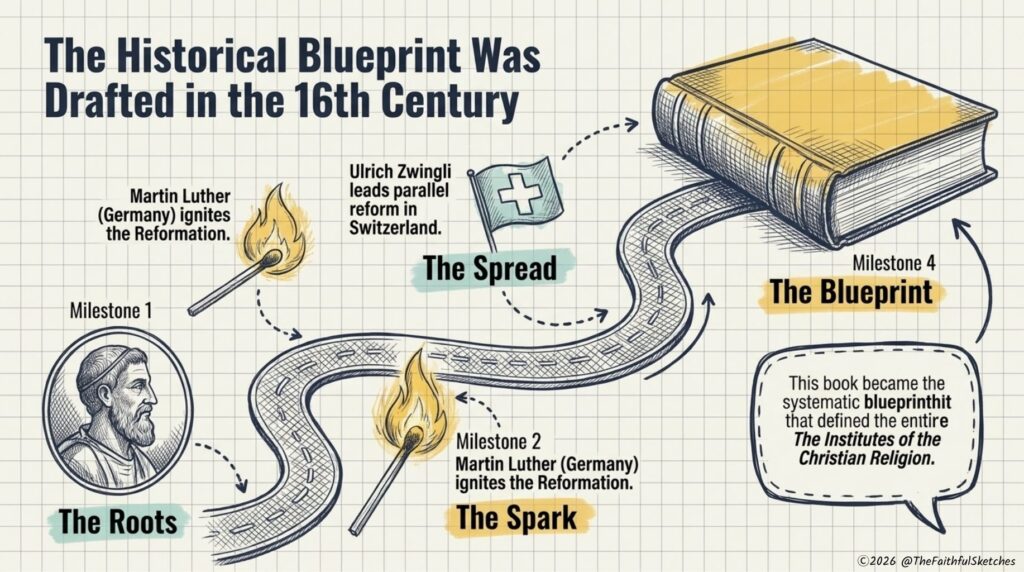
A few years later, a second-generation Reformer named John Calvin built on their work, and particularly on the teachings of Augustine. His book, The Institutes of the Christian Religion, became the systematic blueprint that defined the tradition.
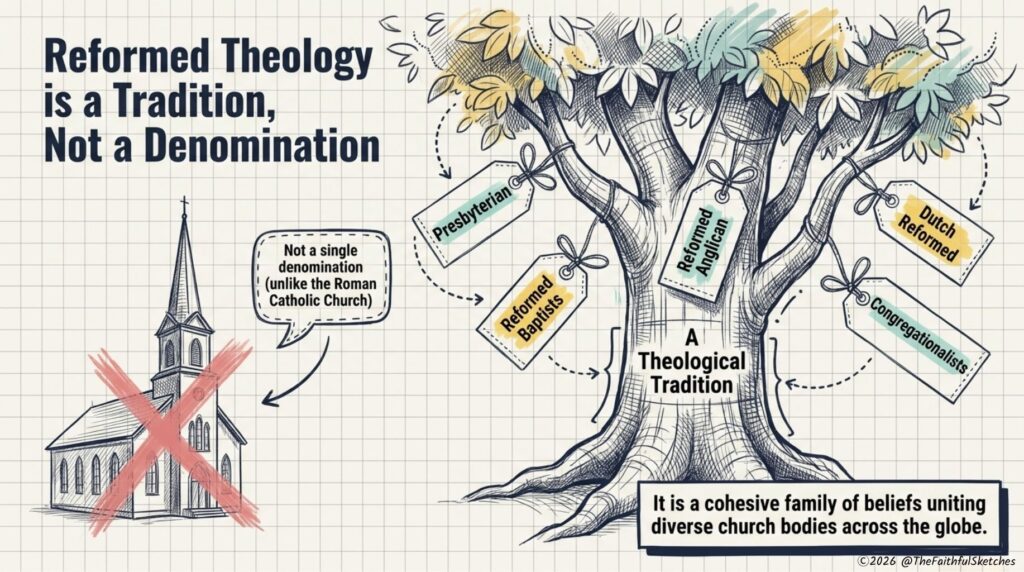
But here’s a crucial point. Reformed is not a denomination like the Roman Catholic Church. You can’t point to a single “Reformed Church.” Instead, it’s a theological tradition, a family of beliefs that birthed denominations like Presbyterians, Reformed Baptists, Reformed Anglicans, the Dutch Reformed, and many Congregationalists. For more on how these branches relate, see my post on the differences between Catholic, Orthodox, and Protestant churches.
The Heart of the Reformation: The Five Solas
The engine of the Reformation ran on five core convictions known as the Five Solas. “Sola” is Latin for “alone.” These are the non-negotiable foundation of Reformed theology.
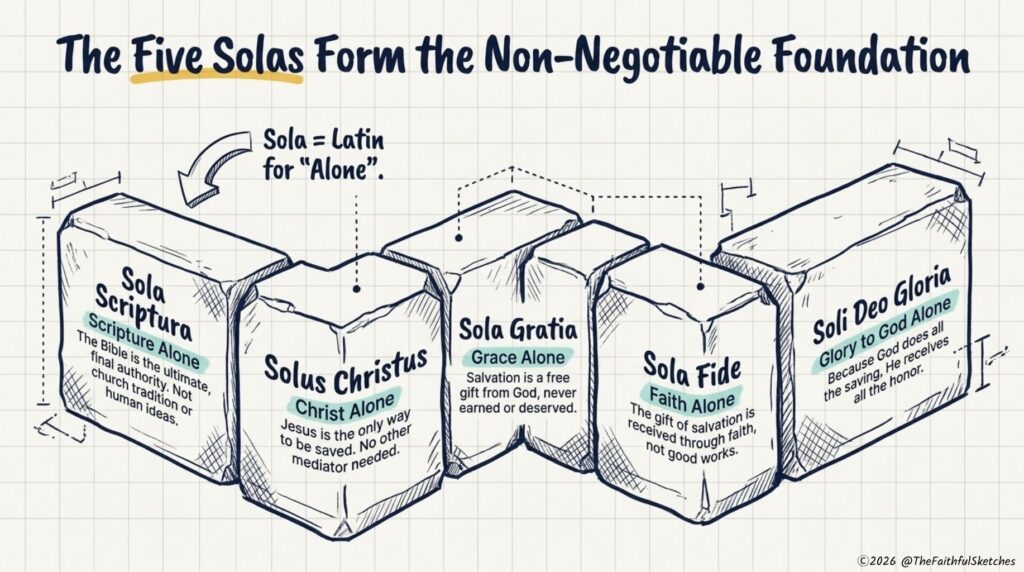
First, Sola Scriptura, Scripture alone. The Bible is the ultimate and final authority for what we believe and how we live, not church tradition or human ideas.
Second, Solus Christus, Christ alone. Jesus Christ is the only way to be saved, and no other mediator is needed.
Third, Sola Gratia, grace alone. Our salvation is a free gift from God, not something we earn or deserve.
Fourth, Sola Fide, faith alone. We receive this gift through faith in Christ, not by our good works.
Finally, Soli Deo Gloria, to God alone be the glory. Since God does all the saving, He gets all the glory, and our entire lives are lived for His honor.
The Central Pillar: God’s Sovereignty and Providence
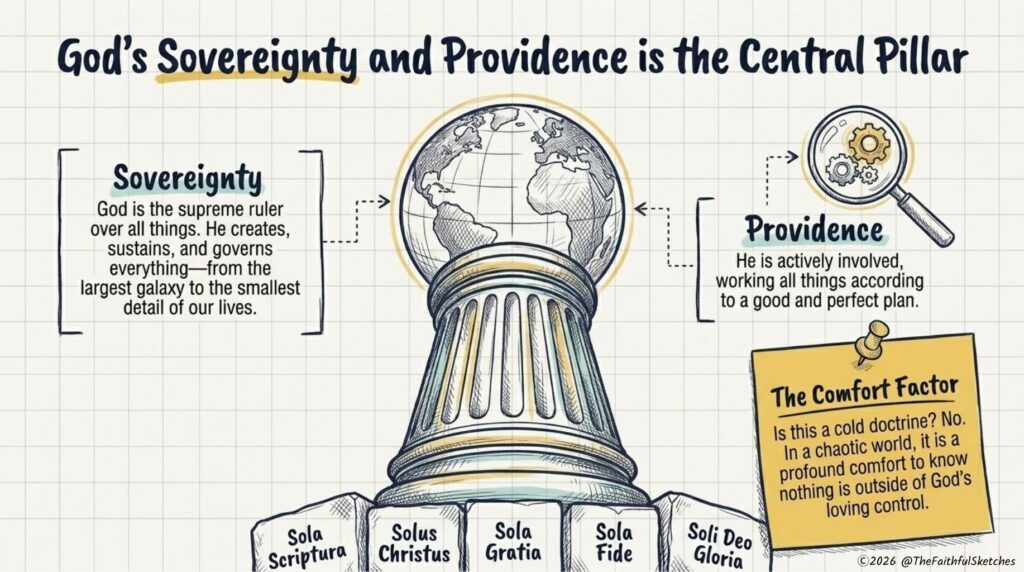
If the solas are the foundation, the doctrine of God’s sovereignty is the central pillar. This simply means God is the supreme ruler over all things. He created everything, and He sustains and governs everything, from the largest galaxy to the smallest detail of our lives.
This includes what we call providence. God isn’t just watching from a distance. He is actively involved, working all things according to His good and perfect plan, as Romans 8:28 affirms.
Is God Sovereign Even Over Suffering?
This leads to a tough question. Is God sovereign even over suffering and evil? Reformed theology teaches that God does not cause evil or sin, but He is so sovereign that He can permit it and even redeem it for a greater good and for His ultimate purposes. This isn’t a cold doctrine. For believers, it’s a deep comfort. It means that in a chaotic world, nothing falls outside God’s control or His loving care.
TULIP: The Five Points of Calvinism
This brings us to the most famous part: TULIP, or the five points of Calvinism. These points developed as a defense of the sovereignty of God in salvation. They answer one question: who saves us, us or God?
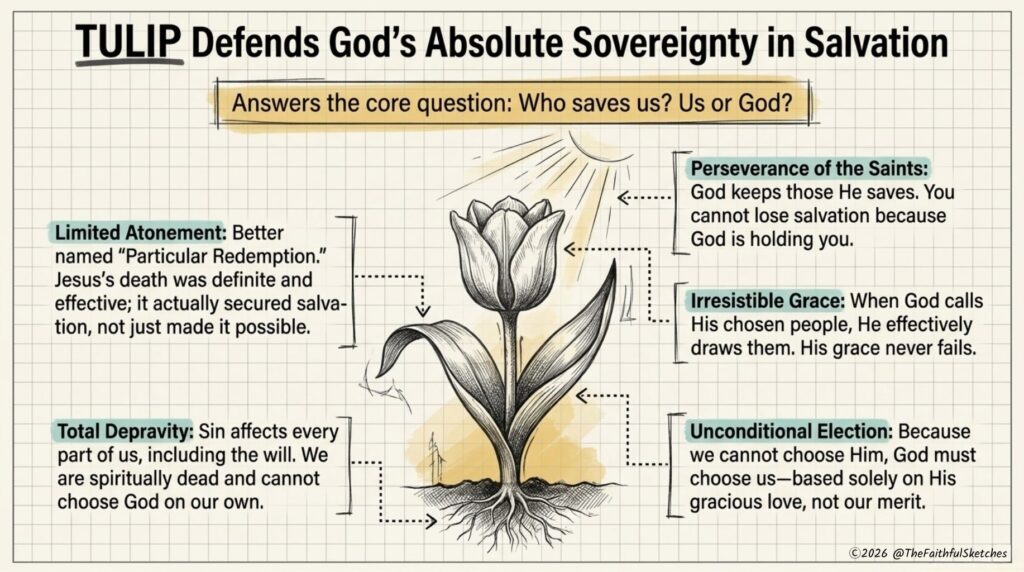
T, Total Depravity. This doesn’t mean we are as evil as we could be. It means sin affects every part of us, including our will. On our own, we cannot choose God. We are spiritually dead, as Ephesians 2:1 describes.
U, Unconditional Election. Because we can’t choose Him, God must choose us. His choice to save us rests not on anything good He sees in us, but solely on His own gracious love.
L, Limited Atonement. This is the most misunderstood point. It means Jesus’s death was definite and effective. He actually secured salvation for His people rather than just making it possible. A better name is “Particular Redemption.”
I, Irresistible Grace. When God calls one of His chosen people to Himself, He effectively draws them, and they will certainly come. His grace is powerful and effective, echoing John 6:44.
P, Perseverance of the Saints. Those whom God has chosen and saved, He will keep. They will persevere in faith to the end. You can’t lose your salvation because God is holding you.
If you want a deeper, verse-by-verse examination of these points, including the case against them, read my companion post on Reformed theology and Calvinism and my breakdown of predestination and free will.
The Big Story: Covenant Theology
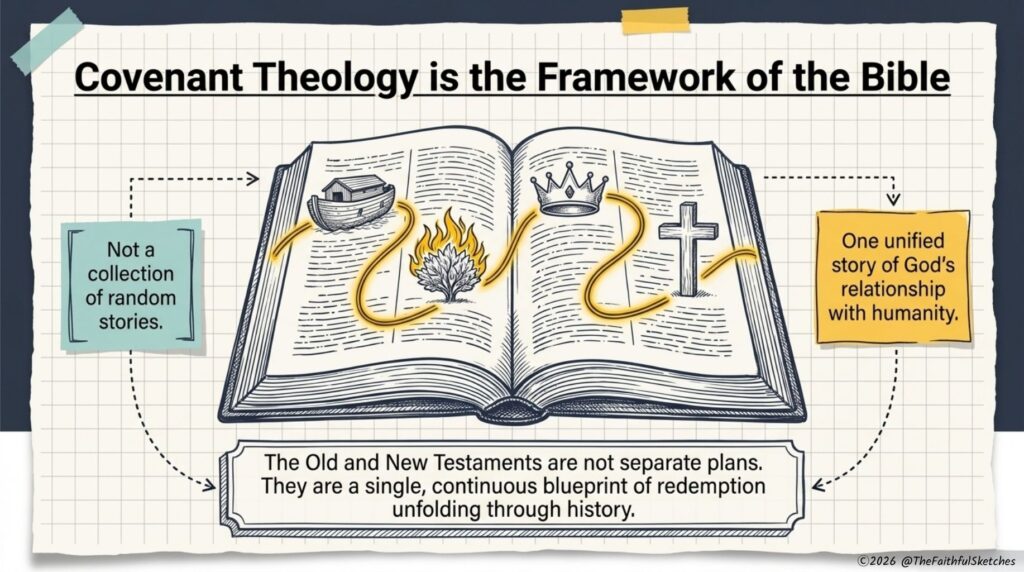
The key feature that makes Reformed theology unique is covenant theology. This is the framework for how Reformed believers read the Bible, not as a collection of random stories but as one unified story of God’s relationship with humanity through covenants. It primarily sees three overarching covenants.
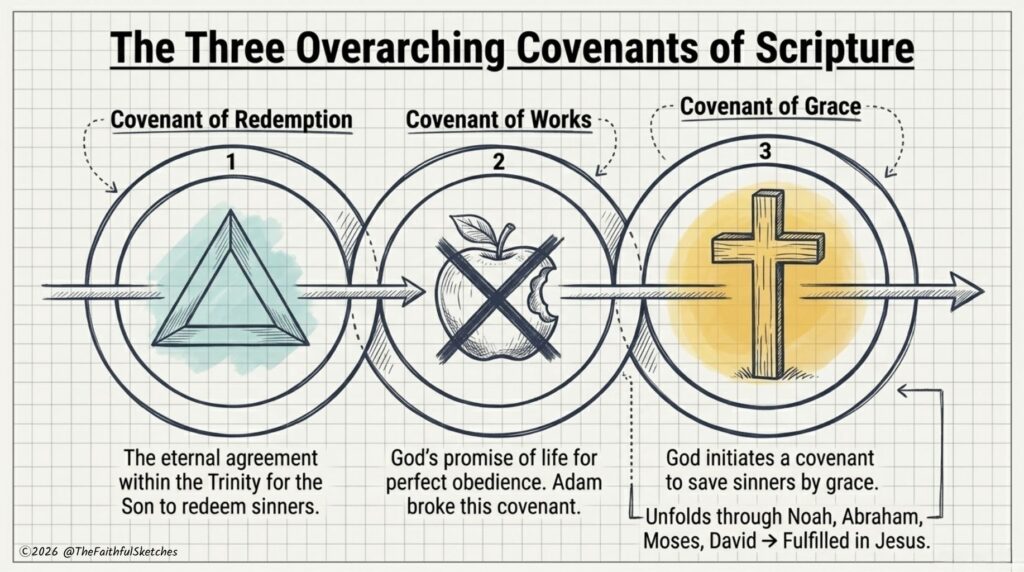
The Covenant of Redemption is the eternal agreement within the Trinity for the Son to redeem sinners.
The Covenant of Works, made with Adam, is where God promised life for perfect obedience, a covenant Adam then broke.
And the Covenant of Grace, starting after the fall, is where God in His grace initiated a plan to save sinners.
This one covenant of grace unfolds through history with Noah, Abraham, Moses, and David, and is ultimately fulfilled in Jesus Christ. So the Old and New Testaments are not separate. They are part of one single plan of redemption. For more on this framework and its main rival, see my posts on what covenant theology is and covenant theology vs dispensationalism.
Church, Sacraments, and the Christian Life
How does this theology shape everyday life? It shapes our view of the church. The true church is recognized by the faithful preaching of the Word and the right administration of the sacraments, Baptism and the Lord’s Supper.
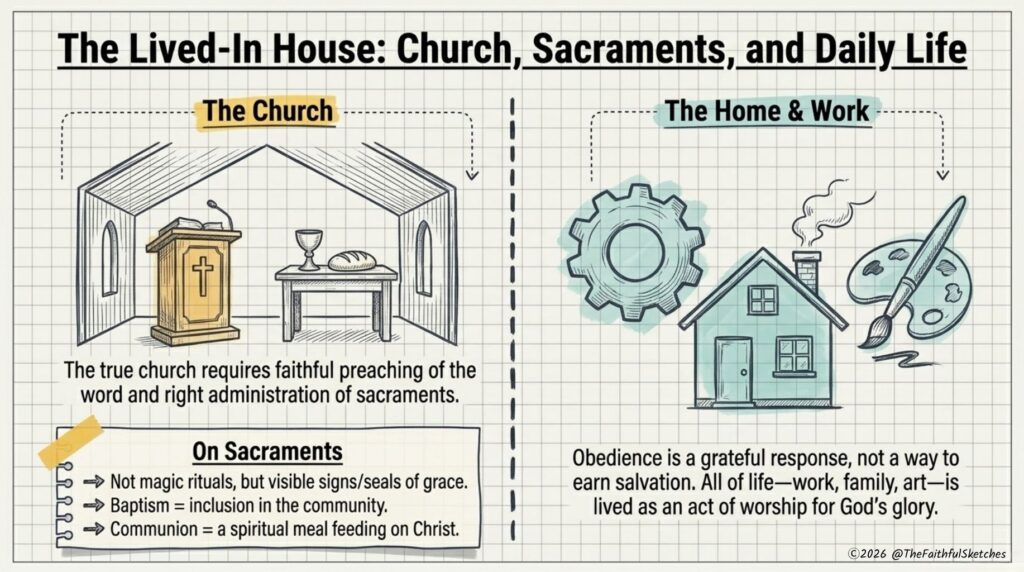
Reformed theology sees these not as magical rituals but as signs and seals of God’s grace. They are visible promises that confirm the gospel to us. Baptism signifies our inclusion in the covenant community. Communion is a spiritual meal where we feed on Christ by faith.
And the Christian life? It’s a grateful response. We obey God’s law not to be saved but because we are saved. We live out every part of our lives, work, family, and art, as an act of worship for the glory of God alone.
Calvinism vs Reformed Theology: The Key Difference
So what’s the actual difference between Calvinism and Reformed theology? Here’s the key. All Reformed theology is Calvinistic, since it holds to the doctrines of grace like TULIP, but not all Calvinists are fully Reformed.
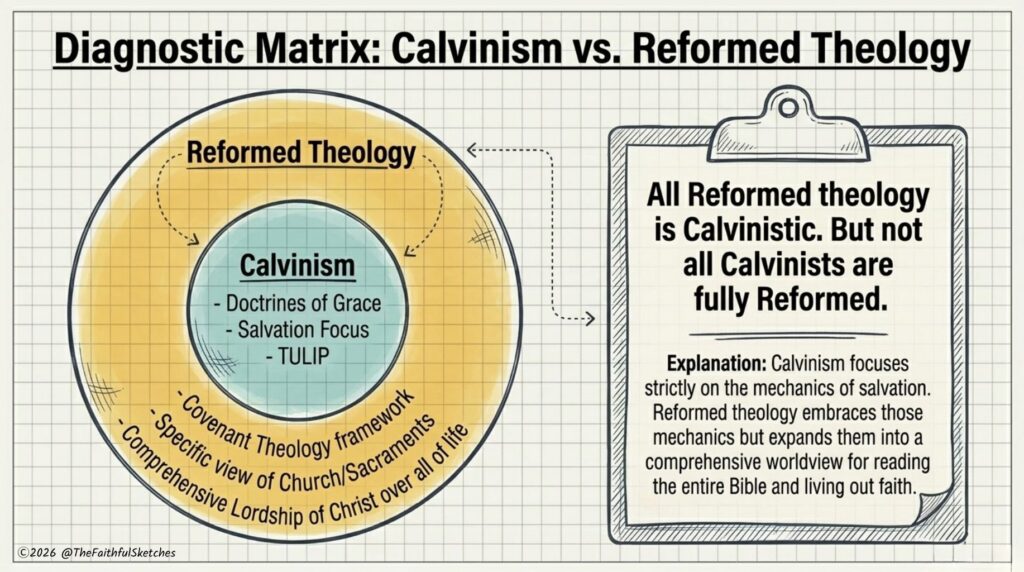
Calvinism often focuses primarily on the doctrines of salvation. Reformed theology embraces those same doctrines but also includes a specific framework for understanding the whole Bible through covenant theology, a particular view of the church and sacraments, and a call to live all of life under the Lordship of Christ. This table makes the contrast clear.
| Feature | Calvinism | Reformed Theology |
|---|---|---|
| Core focus | The doctrines of salvation (TULIP) | The whole scope of Christian faith and life |
| Five Solas | Affirmed | Affirmed |
| TULIP / Doctrines of Grace | Central | Included, but one part of a larger system |
| Covenant theology | Not necessarily | Essential |
| View of church and sacraments | Varies | Defined and central |
| Confessions | Optional | Confessional (Westminster, the 1689, etc.) |
| Relationship | All Reformed believers are Calvinists | Not all Calvinists are fully Reformed |
In short, Calvinism addresses one area of doctrine. Reformed theology provides a complete architecture for the entire Christian faith.
Common Questions and Criticisms
This theology naturally raises questions. Let’s address the most common ones.
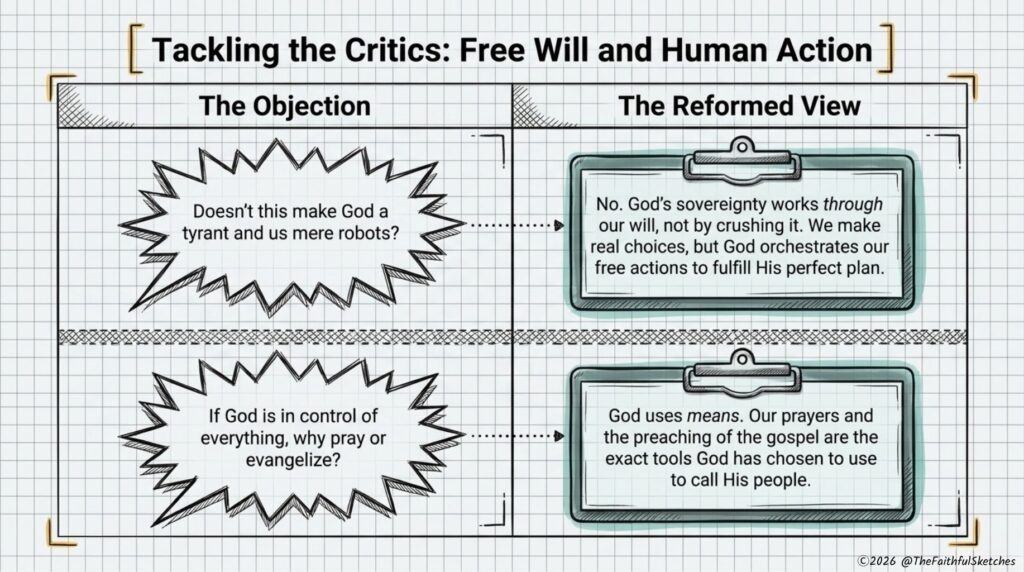
Doesn’t This Make God a Tyrant and Us Robots?
Reformed theology says no. God’s sovereignty doesn’t crush our will. It works through it. We make real choices, but God is so great that He can orchestrate our free actions to fulfill His perfect plan.
If God Controls Everything, Why Pray or Evangelize?
This is a practical question, and the answer is that God uses means. Our prayer and our preaching of the gospel are the very tools God uses to call His people to Himself. The end and the means are both ordained.
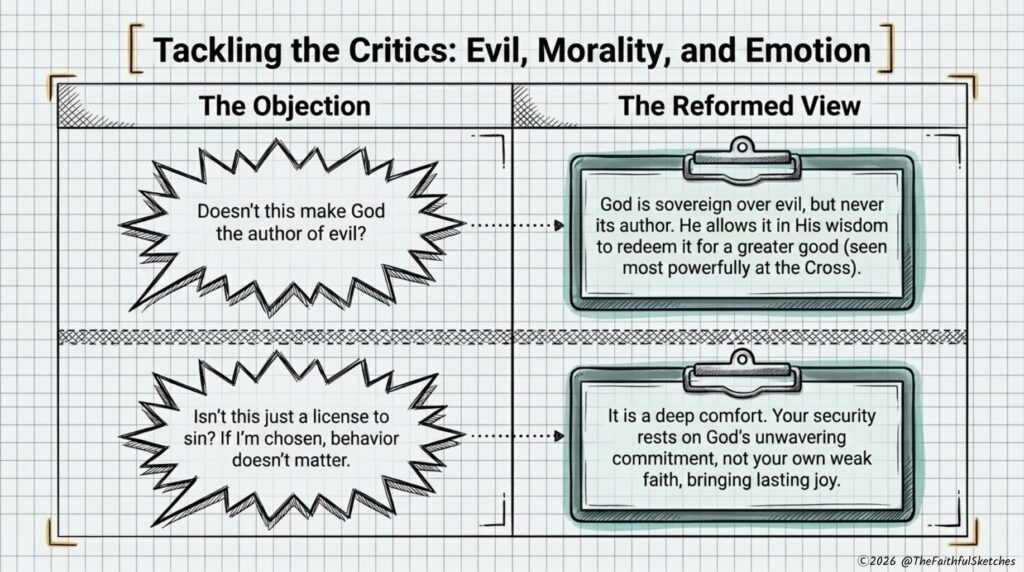
Doesn’t This Make God the Author of Evil?
Reformed theology teaches that God is sovereign over evil but never its author. He does not sin or cause sin. Yet in His wisdom, He allows evil and can redeem it for a greater good. We see this most powerfully at the cross, where the greatest evil accomplished the greatest good.
Isn’t This Just a License to Sin?
If I’m chosen, does it matter how I live? Reformed theology teaches that salvation isn’t a reward for good behavior. It produces good behavior. God’s grace transforms us. We don’t obey to earn His love. We obey because we are loved, and gratitude naturally leads to a holy life.
Where’s the Love and Joy in Such a Cold System?
God’s sovereignty isn’t a cold doctrine. It’s a deep comfort. Your salvation rests not on your weak faith but on God’s unwavering commitment, which gives you security, humility, and lasting joy.
Main Reformed Denominations Today
You can find churches that hold to Reformed theology all over the world. Some of the main denominations include Presbyterian churches, many Reformed Baptist churches, the Christian Reformed Church, the United Reformed Church, and the Anglican tradition, which has a strong Reformed stream as well.
Conclusion: A Glorious Vision of God
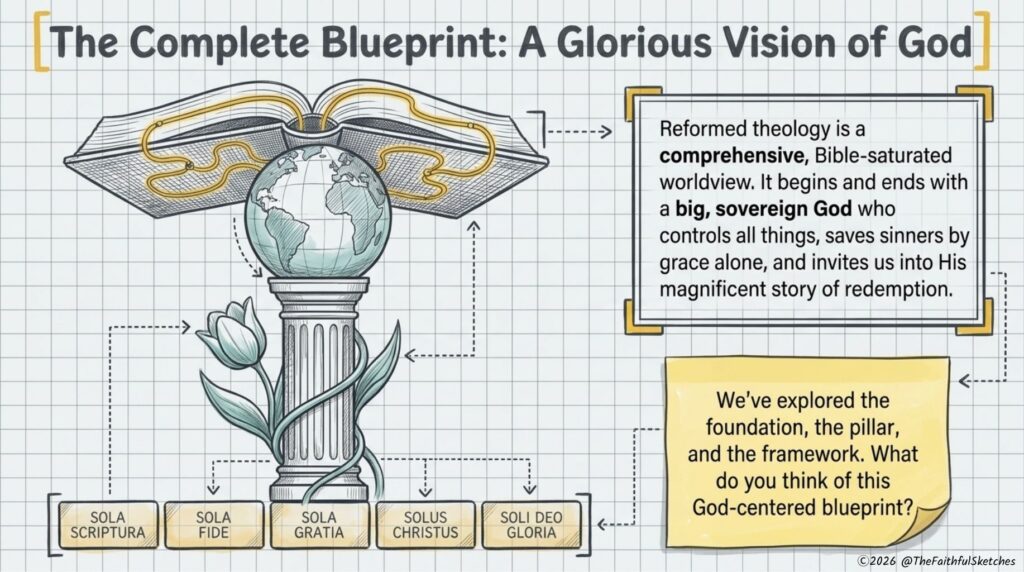
So, as we’ve seen, Reformed theology is far more than Calvinism. It’s a comprehensive worldview that begins and ends with a big, sovereign God. It’s a vision of a God who is in control of all things, who saves sinners by grace alone, and who invites us to see all of history and all of our lives as part of His magnificent story of redemption.
To recap the heart of Calvinism vs Reformed theology: it’s a God-centered, Bible-saturated worldview built on the Five Solas. It includes the Doctrines of Grace in TULIP but expands into a covenantal understanding of the whole Bible. It seeks to worship God as He commands. And in all of it, He alone receives the glory.
I hope this gave you a clear overview of what your Reformed friends or pastors believe. This is a huge topic, and we’ve only scratched the surface. What do you think of this framework? Let me know in the comments below.
Click Below to Download The Full PDF Summary Visual Guide:
*Free for personal use only. Please don’t resell or redistribute commercially.