
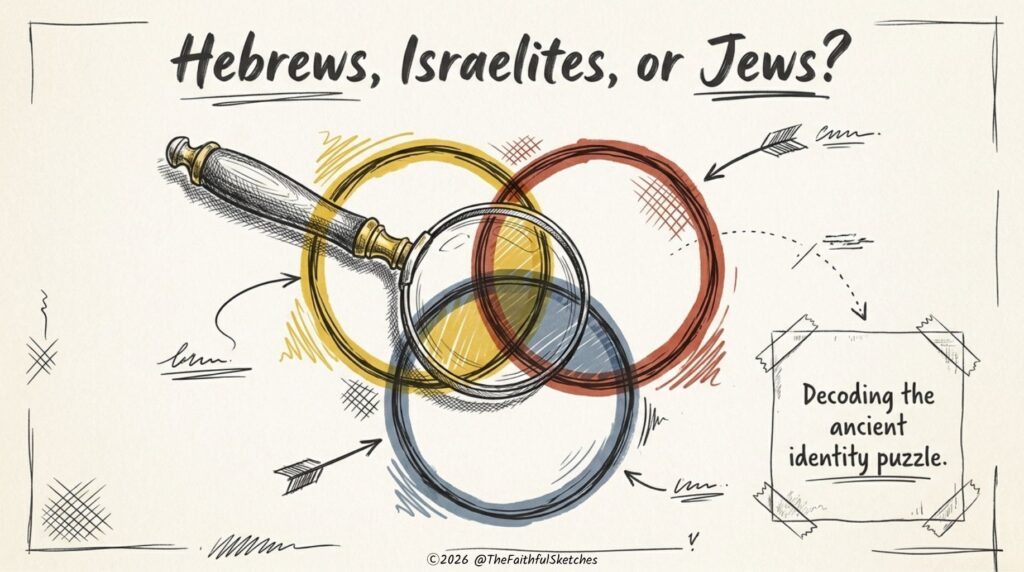
Abraham is called a Hebrew. The people who leave Egypt are called Israelites. In the New Testament, they are called Jews. Many assume these terms mean the same thing, but the Bible uses each one in very specific moments, tied to a different stage in history.
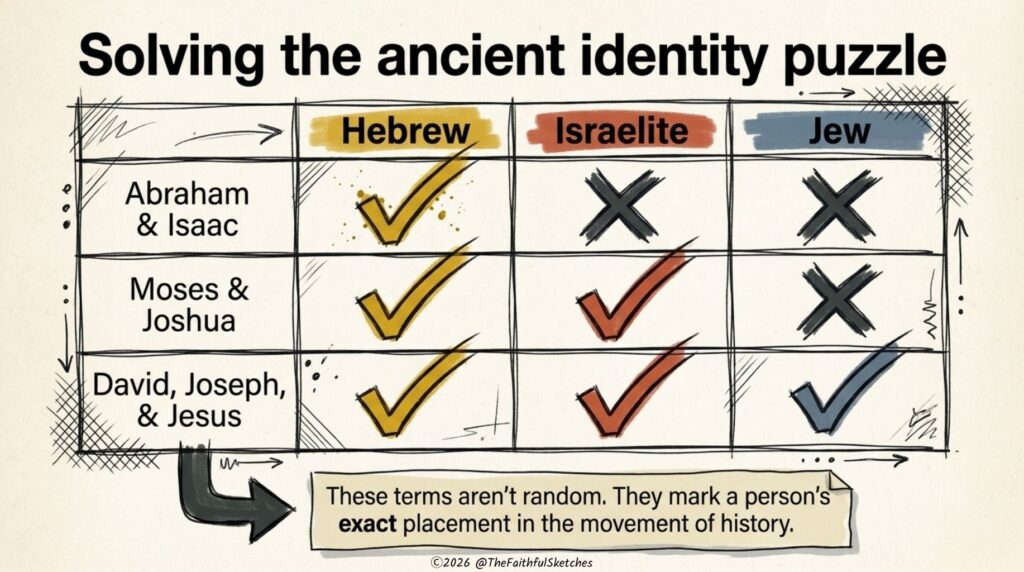
By the end of this post, you will understand why all Jews in the Bible are Israelites, but not all Israelites are Jews. And why Abraham and Isaac are neither Israelites nor Jews, while King David, Joseph and Jesus are both.
Part 1: Hebrew — The Beginning
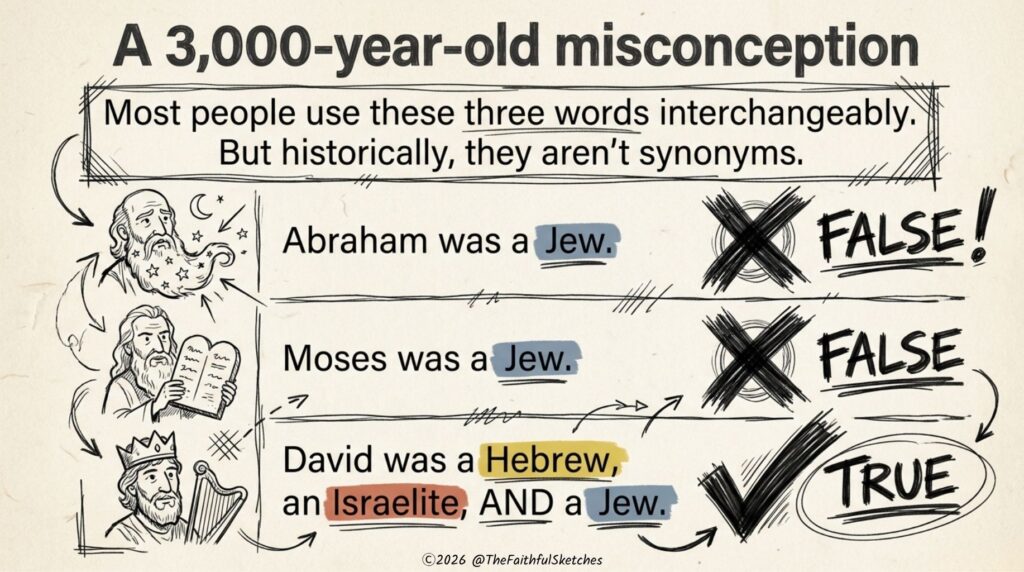
The first time this word appears is in Genesis, where Abraham is described as “Abram the Hebrew.” At this point in history, there is no nation of Israel, no tribes, and no kingdom. There is only a man, his family, and a promise from God.
The word Hebrew is often connected to a root meaning “to cross over.” This fits Abraham’s story closely. He leaves his homeland, crosses into a new land, and begins a completely new life in response to God’s call. Hebrew describes someone who has come from the other side, someone who has crossed over both physically and spiritually.
In the early parts of the Bible, this term is often used by outsiders. When Joseph is in Egypt, he is identified as a Hebrew. When Moses is born, he is described as a Hebrew child. In these situations, the word does not describe a nation but a people group with a shared ancestry.
Hebrew is best understood as an ancestral identity. It tells you where they come from, but not yet what they have become.
Interesting Fact: Ancient Hebrew began as a Canaanite dialect before becoming the distinct language found throughout the Old Testament.
Part 2: Israelite — The Nation Formed
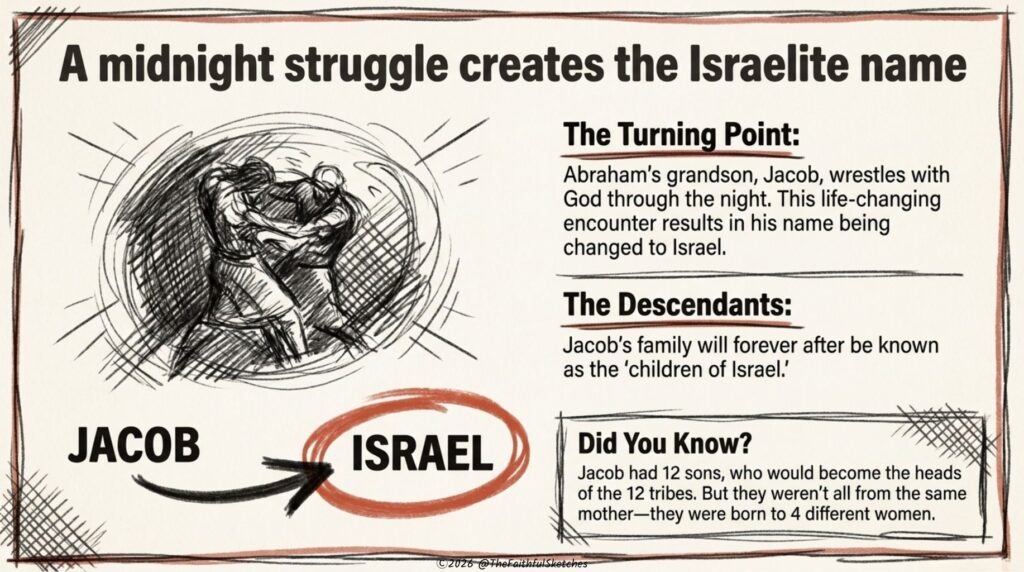
As the story continues, a major turning point comes through Abraham’s grandson, Jacob. One night, Jacob wrestles with God in a moment that changes his life. After this encounter, his name is changed to Israel. His descendants will now be known as the children of Israel.
Jacob has twelve sons, and these sons become the heads of the twelve tribes. From this point forward, the people are no longer just a family tied to Abraham. They are becoming a structured group with a shared identity, history, and purpose.
An Israelite is a descendant of Jacob. This is the identity you see during the Exodus when they leave Egypt under Moses. It continues through the wilderness, the conquest of Canaan, and the establishment of the kingdom under David and Solomon.
While Hebrew points to their origin, Israelite points to their development into a nation.
Interesting Fact: Not all Israelites were from the same mother. Jacob’s twelve sons came from four different women.
Part 3: Jew — The Surviving People
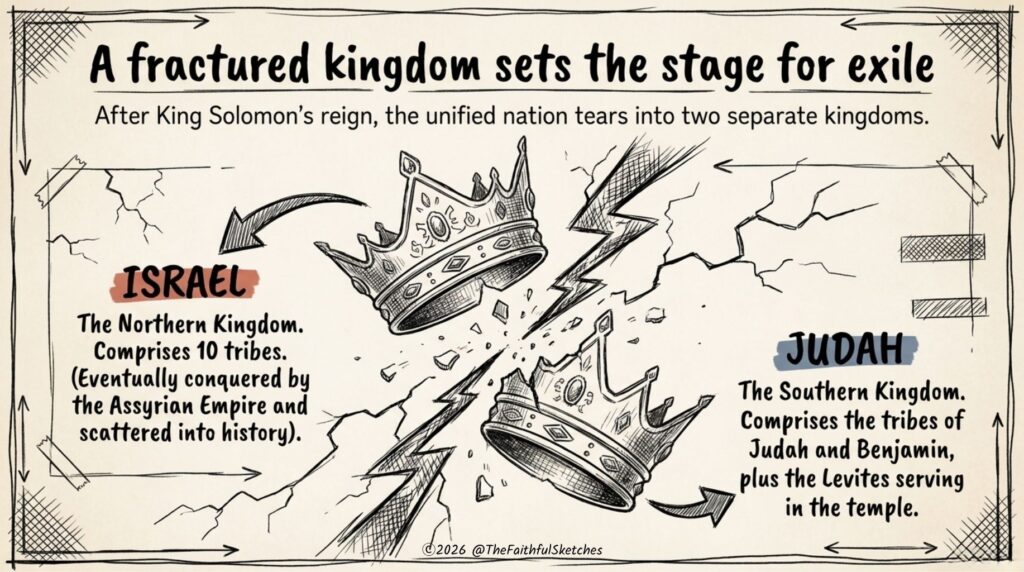
The next shift happens during one of the most difficult periods in their history. After the reign of King Solomon, the united kingdom splits into two. The northern kingdom continues to be called Israel and is made up of ten tribes. The southern kingdom is called Judah, made up mainly of the tribes of Judah and Benjamin.
The northern kingdom eventually falls to the Assyrian Empire. Its people are scattered and the ten tribes gradually disappear from history as a unified group. The southern kingdom of Judah is later conquered by Babylon. Jerusalem is destroyed, the temple is burned, and the people are taken into exile.
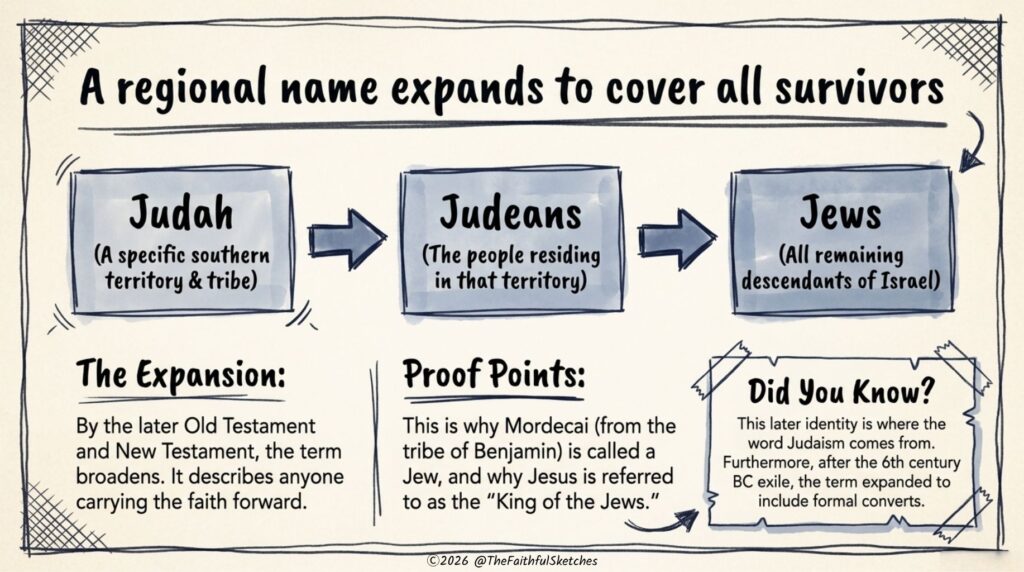
It is during and after this period that the word Jew becomes prominent. The term comes from Judah, and originally referred specifically to someone from that region or tribe. Because the people of Judah are the ones who survive and preserve their identity, the term expands over time to describe the descendants of Israel as a whole.
This is why Mordecai, from the tribe of Benjamin, is still called a Jew. And why Jesus is referred to as the King of the Jews.
Interesting Fact: The word Jew is where we get the word Judaism. The religion itself takes its name from this later identity.
Seeing the Full Picture
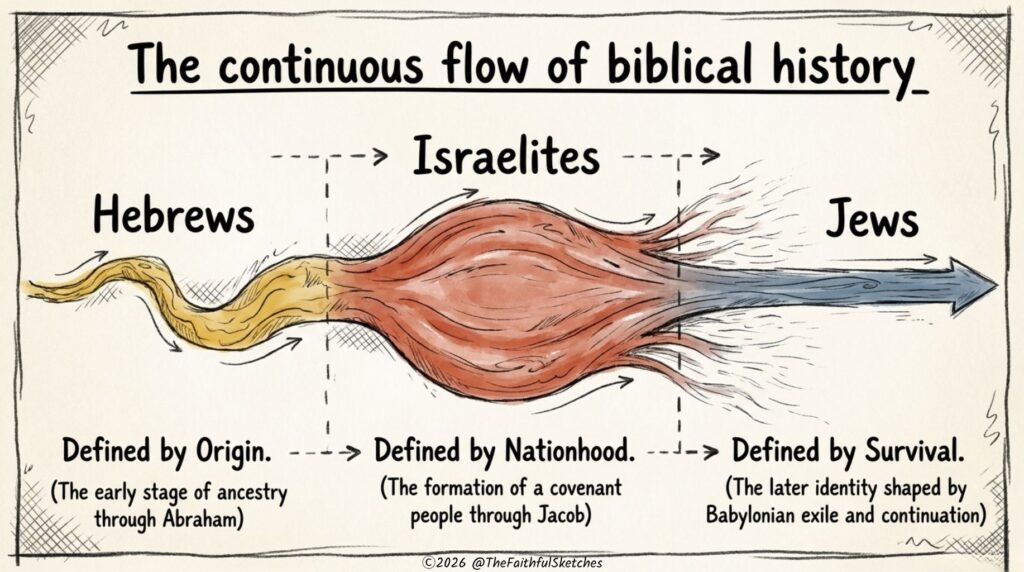
When you step back and look at the full timeline, the relationship between these three terms becomes clear. They are not separate groups but the same people seen at different points in history.
- Hebrew emphasises their origin and ancestry through Abraham
- Israelite reflects their identity as a covenant people descended from Jacob
- Jew carries forward through the later biblical period and into the time of Jesus
The next time you come across these words in the Bible, pay attention to the context. These terms are not random. They mark the movement of history.
All Jews in the Bible are Israelites, but not all Israelites are Jews. Abraham and Isaac are neither Israelites nor Jews. Moses and Joshua are Israelites but not Jews. King David, Joseph and Jesus are both Israelite and Jew.
Once you understand how they connect, the Bible becomes much easier to follow because you are no longer just reading names. You are reading history.
Is there a Bible topic you would like us to cover next? Let us know in the comments below.
Click Below to Download Your The Full PDF Summary Guide:
*Free for personal use only. Please don’t resell or redistribute commercially.